
President Donald Trump’s new executive order on mail-in voting is offering the clearest explanation yet for why the Justice Department has spent months aggressively seeking access to state voter rolls, while also triggering a sweeping legal challenge from Democrat-led states.
Twenty-three Democratic states and the District of Columbia filed a lawsuit on Friday, just days after Trump signed the order, in federal court in Massachusetts seeking to stop the Trump administration from implementing it, arguing it unconstitutionally interferes with states’ authority to run elections. The lawsuit, which is led by California, contends that neither the Constitution nor federal law gives the president power to mandate changes to state election systems.
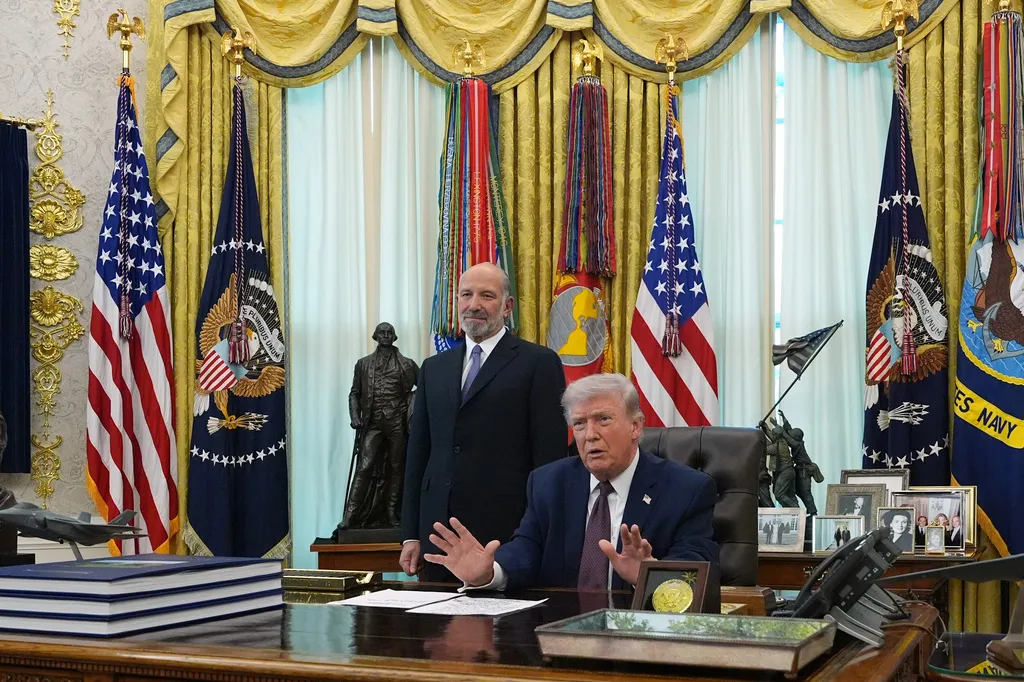
“The EO disregards States’ inherent sovereignty and attempts to arrogate to the President the States’ and Congress’s constitutional power to regulate federal elections,” the states wrote, warning the directive violates “bedrock principles of federalism and separation of powers.”
Why DOJ wants state-level voter data
Trump’s order laid out the clearest reasoning yet for why the DOJ has been fighting in courts for months to obtain voter roll data from states across the country.
At its core, the order directs the federal government to build a citizenship verification system that would compare state voter registration lists against federal databases, according to a post about it on the White House webpage.
The data, which is being sought in 29 separate lawsuits against states that have not voluntarily offered it, would be used to flag voter registrations by people who are possibly noncitizens, guide DOJ investigations and prosecutions, and support a more standardized mail-in voting system built around verified voter lists. So far, 17 Republican-led states have complied by supplying the administration with the data.
The order also calls on the Department of Homeland Security to compile “State Citizenship Lists” of eligible voters and directs the U.S. Postal Service to ensure ballots are sent only to people on approved lists, with additional requirements such as unique barcodes for ballot tracking. States that do not comply could risk losing federal funding.
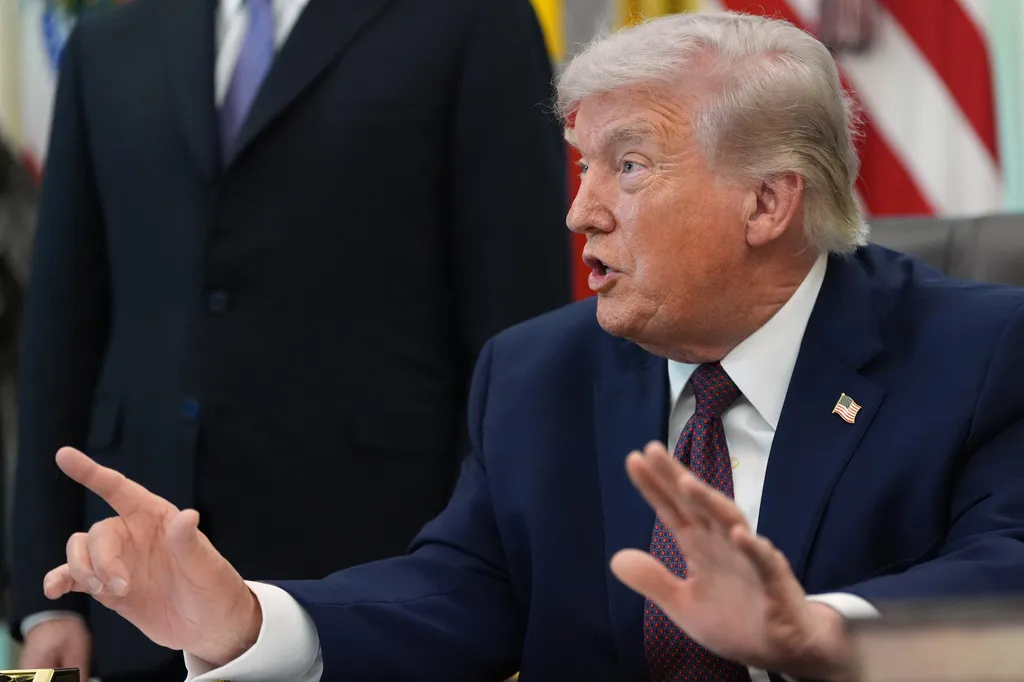
Trump has long distrusted mail-in voting, particularly after his defeat to then-candidate Joe Biden in 2020, when approximately 66.4 million people voted by mail in the wake of the pandemic. Trump said last week that “cheating on mail-in voting is legendary.”
“It’s horrible what’s going on,” the president said as he signed the order. “I think this will help a lot with elections.”
A complicated system of checks
But Trump’s approach is set to collide with constitutional limits on federal power, with election law experts predicting it will be one of the fastest policies to be enjoined as litigation moves ahead.
Derek Muller, a law professor at the University of Notre Dame, told the Washington Examiner that the order raises both constitutional and practical concerns about how such a system could function.
“It’s very complicated,” Muller said, noting the order appears to contemplate multiple overlapping voter lists maintained by states, federal agencies, and the Postal Service. “There are just all these practical logistical concerns with election administration that are not conducive to this kind of layer of federal oversight.”
U.S. elections are uniquely decentralized, conducted by election officials across thousands of state and local jurisdictions rather than by a single national system. The Constitution’s elections clause gives Congress the authority to “make or alter” election rules for federal offices, but it does not grant the president direct control over how elections are administered.
Among the biggest hurdles for the Trump administration is timing. The order suggests states would need to submit verified voter lists well ahead of elections, even though many states allow voter registration and absentee ballot requests close to, or even on, Election Day.
“There are real feasibility concerns in trying to make something like this happen,” Muller said.
Even as lawsuits move forward, Muller said the path of enforcement could be uneven. Early injunctions in some states are likely, but it remains unclear how broadly those rulings would apply nationwide.
A key question is how states not covered by injunctions, particularly Republican-led states, might respond.
“I do think there is a degree of uncertainty about what might happen,” Muller said, noting some states could face competing pressures between complying with the administration’s order and adhering to their own election laws. That could lead to additional litigation or a patchwork system in which the order is enforced in some states but blocked in others.
At the same time, Muller said certain elements of the plan, such as voluntary data-sharing between states and federal agencies to verify citizenship, could have practical value if implemented carefully and used as a back-end check to ensure that only eligible citizens are participating in elections nationwide.
Other election analysts said the mechanics of the system outlined in the order remain unclear, particularly when it comes to how different federal and state voter lists would interact.
For example, the order appears to contemplate at least three separate databases, including a federal citizenship list compiled by DHS, a state-generated list of voters eligible to receive mail ballots, and a Postal Service list of individuals authorized to receive and return ballots through the mail.
But what the order does not clearly explain is how those lists are supposed to connect or which list ultimately governs who can vote by mail.
TRUMP ORDERS POSTAL SERVICE TO LIMIT MAIL BALLOTS TO VOTERS ON NEW DHS-APPROVED LISTS
“This executive order doesn’t make clear how the administration will even do what they say they’re doing,” election lawyer Aaron Blacksberg told Votebeat, pointing to the lack of direction on how the lists would be reconciled or enforced.
However, the order directs the Postal Service to develop rules governing the system by May 30, suggesting key details of how the verification process would be executed are still in the works.