
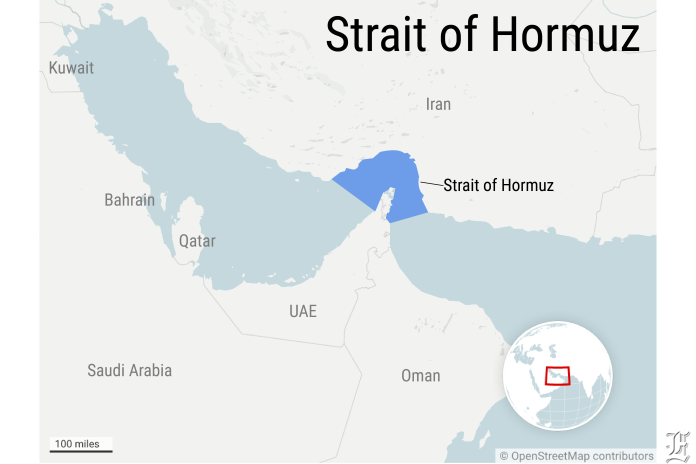
The United Kingdom hosted a virtual summit Thursday with over three dozen countries seeking to establish a plan for reopening the Strait of Hormuz as a frustrated White House orders them to figure the issue out for themselves.
The evening before the meeting, President Donald Trump told allies that, since the American military has finished the “hard part” of “both militarily and economically” decimating Iran, “the countries of the world that do receive oil through the Hormuz Strait must take care of that passage.”
British Foreign Minister Yvette Cooper and her counterparts on Thursday focused on “diplomatic and international planning measures” to alleviate the “unsustainable increases that we have seen in oil prices and food prices hitting households and businesses in every corner of the world” caused by the strait’s closure.
The foreign minister lamented that “Iranian recklessness towards countries who were never involved in this conflict” is compromising “global economic security” by spiking oil prices and the basic cost of living in places like the U.K.
She lambasted the Islamic Republic for perpetuating “over 25 attacks on vessels in the strait” and worried that there are “20,000 trapped seafarers on some 2,000 trapped ships” in the region.
A group of countries, including Italy, the United Arab Emirates, and the Netherlands, has put forward a plan to establish a humanitarian corridor through the strait as an alternative to a full-scale clearing.
Italian Foreign Minister Antonio Tajani told the summit that the corridor would primarily serve to transport critical goods like “fertilizers and any other supplies needed to prevent a new food crisis, particularly in African nations.”
United Nations Secretary-General António Guterres warned last week that the strait closure “is choking the movement of oil, gas, and fertilizer at a critical moment in the global planting season.”
He added that the conflict risks “igniting a chain of events that no one can control in the most volatile region of the world.”
The U.S. was noticeably absent from the discussions, reflecting the White House’s growing sense of distance from its European and NATO allies due to their lack of cooperation in the conflict.
Asked by Reuters on Wednesday whether he would consider pulling out of NATO after Spain and Italy refused requests for use of their airbases for Operation Epic Fury, Trump said: “Absolutely without question — wouldn’t you do that if you were me?”
French President Emmanuel Macron told reporters in South Korea on Thursday that he believes “organizations and alliances like NATO are defined by what is left unsaid — by the trust that underpins them.”
IRAN WAR EXPOSES STRATEGIC VULNERABILITY IN FRAGILE US ALUMINUM SUPPLY CHAIN
“We need to be serious. When we want to be serious, we don’t say the opposite of what we said the day before every single day,” he added, a veiled swipe at Trump’s mercurial disposition. “And perhaps we shouldn’t speak every day.”
Macron went on to say that “liberation of the Strait of Hormuz by force through a military operation” is an option he considers “unrealistic.”
Cooper told her counterparts at the Thursday summit that there will be another meeting next Tuesday to determine how the nations can “marshal our collective defensive military capabilities” to clear mines from the strait.