
Closing his eyes at times to take it all in, President Donald Trump sat stone-faced for the roughly 90 minutes he spent listening in person to his solicitor general defend his executive order ending the modern interpretation of birthright citizenship before the Supreme Court on Wednesday.
Flanked by Attorney General Pam Bondi and Commerce Secretary Howard Lutnick, Trump sat in the public gallery several rows behind the Department of Justice lawyers arguing before the justices. His expression gave little indication of how he felt about the aggressive questioning Solicitor General D. John Sauer faced from several conservative justices who appeared skeptical of the executive order. But his presence alone was noteworthy.
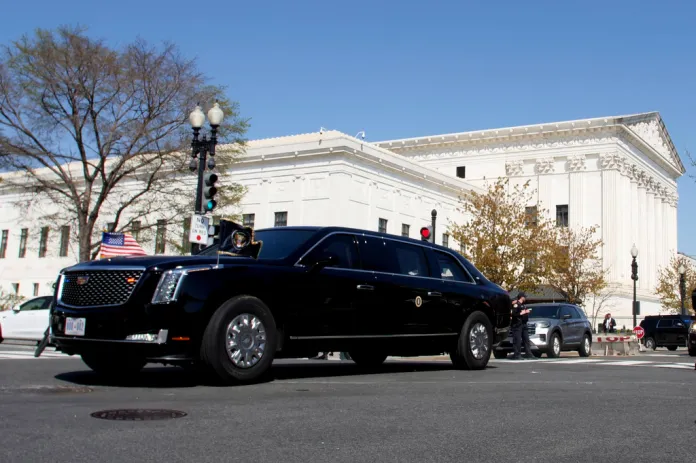
Trump made history as the first sitting president to attend oral arguments at the Supreme Court. And he chose a contentious case for the milestone: the birthright citizenship issue has sparked a fierce political debate about illegal immigration, Chinese influence, national allegiance, and what the authors of the 14th Amendment truly intended.
BIRTHRIGHT CITIZENSHIP FACES FIRST SUPREME COURT TEST IN MORE THAN 100 YEARS
One day before oral arguments, Trump cited the growing practice of birth tourism among wealthy Chinese nationals as a reason why the federal government should interpret the 14th Amendment differently.
“Birthright Citizenship has to do with the babies of slaves, not Chinese Billionaires who have 56 kids, all of whom ‘become’ American Citizens,” Trump wrote on Truth Social on Tuesday. “One of the many Great Scams of our time!”
The president spent roughly an hour and a half in the audience listening to arguments. Upon arrival, he appeared to examine the details on the ceiling of the chamber before moving to an aisle seat. He left the Supreme Court after Sauer was done defending the administration’s opposition to birthright citizenship for illegal immigrants and temporary visitors.
The justices did not appear phased by the sight of a president who is passionate about the outcome of the case sitting in the audience. Sauer faced tough questions about the legal basis for Trump’s sweeping executive order, leaving the fate of birthright citizenship uncertain by the time the American Civil Liberties Union concluded its arguments against the order on Wednesday afternoon.