
TURTLE CREEK, Pennsylvania — For a very long stretch in America’s industrial past, not only did this region build things here, but its people also researched, invented, failed, and eventually succeeded in multiple industries, including steel, railroads, glass, coal, and aluminum. They also did something else that was incredibly significant. They had the dominant hand in lighting the world.
Thomas Edison is widely acclaimed as the man who brought the first practical-use lightbulb to life in the 1870s. But it was what happened here, in a massive building along the Monongahela River, that lit up the world. Nikola Tesla went to work here with George Westinghouse, an Edison competitor. Together, they changed the course of the Industrial Revolution by working on patents Tesla developed for alternating current technology.
Despite Edison conducting a propaganda campaign to convince the public that AC was dangerous, the research and work done by Tesla and Westinghouse earned them a contract to supply electricity to the 1893 World’s Columbian Exposition in Chicago.
On May 1 of that year, using their pioneering AC system, President Grover Cleveland pushed a button to light over 150,000 incandescent lamps, igniting the fairgrounds’ neoclassical buildings and transforming them into the “City of Light.”
The light show was a wonder to behold, leading to a contract to construct AC generators for a hydroelectric power plant at Niagara Falls. Three years later, the plant started producing electricity that could deliver power all the way to Buffalo, New York.
But when it came to lights, what America lacked was reach. Westinghouse’s relentless pursuit of AC became foundational to the Industrial Revolution’s second phase by allowing power transmission across long distances, thereby creating widespread industrial electrification. In other words, it powered the factories that made buildings, roads, and bridges, making the country an industrial powerhouse.
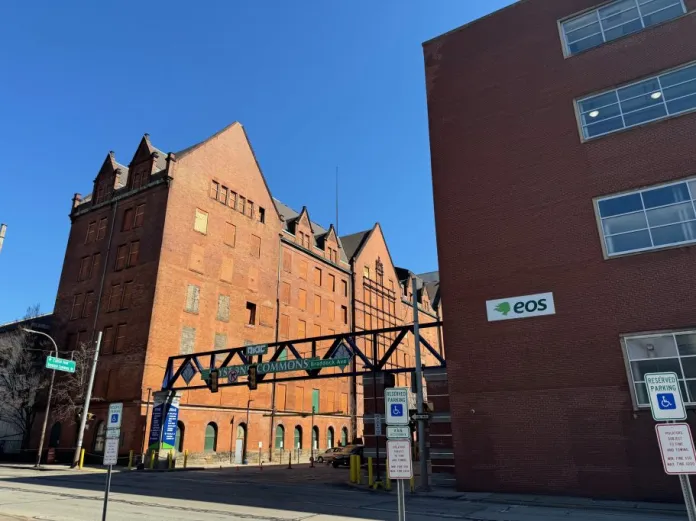
Standing in front of the building where Westinghouse and Tesla made all of this happen over 130 years ago — and several weeks before Neiswonger Construction brought it all down in under a month — there was a sense of nostalgia for what happened here. Few understand how much it affected the lives of their grandparents and great-grandparents, let alone their own.
I walked through it months before it came down. And despite neglect having taken its toll on the structure, you knew something great had happened there.
SALENA ZITO: PROGRESSIVE POLITICS CHALLENGE THE BASIC DUTIES OF PITTSBURGH COPS
Western Pennsylvania is once again at the forefront of another big moment in a different kind of revolution. This time, it is a technological revolution, and our region’s electrical legacy is about to power the artificial intelligence boom. And just like the second phase of the last Industrial Revolution, what is made here will change the world.
America’s power grid is facing a serious crunch. Electricity demand is skyrocketing, driven by the rapid rollout of AI data centers, widespread electrification across homes and industries, the reshoring of manufacturing, and the urgent need to upgrade aging infrastructure.
Critical components such as transformers are in extremely short supply, with lead times for large ones stretching to 3 to 4 years. Distribution transformers are facing backlogs of more than a year, and prices have multiplied since pre-2022 levels.
Recent industry reports highlight the persistent shortages that could continue well into 2026 and beyond, leading to potential deficits of 30% or more in key equipment, delaying major grid projects and holding back new facilities nationwide.
This isn’t just a technical issue; it’s hitting real projects hard.
New hyperscale data centers are being constructed, but they can’t come fully online because the necessary electrical infrastructure simply isn’t available yet. Forecasts indicate that data center power consumption alone could double or even triple by 2030, contributing heavily to overall U.S. electricity growth and underscoring the need for massive grid expansion and reliable energy storage.
However, this is where western Pennsylvania’s historic relationship with lighting the country stands out. This national challenge is turning into a major opportunity for this region. The people and industries here are not just observers. They are positioned to be a key part of the solution, building on both the region’s historic industrial strengths and the latest wave of investments in energy manufacturing.
It begins with the essential raw material: grain-oriented electrical steel, the specialized magnetic steel that is at the core of nearly every transformer.
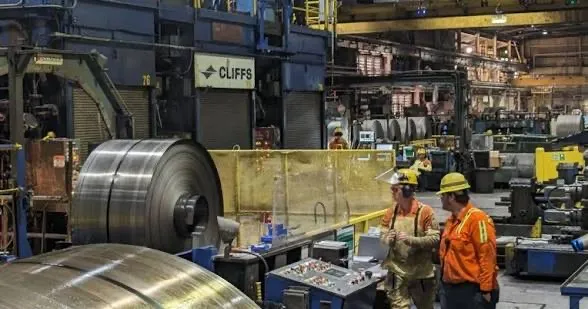
The only domestic producer of this critical component has key operations at the Cleveland-Cliffs Butler Works facility in western Pennsylvania, and supporting production nearby. As global supplies tighten and demand surges, the region’s local steelmaking capacity is becoming indispensable for easing transformer shortages and enabling America’s grid to scale up.
Since Westinghouse launched his electric company in Pittsburgh in 1886, the “Empire of Lights” that he built here revolutionized electrification. Today, the companies advancing that vision are expanding aggressively in the region’s backyard to meet the grid’s pressing demands.
Hitachi Energy has committed major investments to facilities in Westmoreland County, ramping up production of high-voltage switchgear, circuit breakers, and other essential grid-modernizing equipment — all while adding 100 new jobs and retaining 299 others.
Mitsubishi Electric Power Products is investing heavily in a new advanced switchgear facility in Beaver County, significantly boosting capacity and creating hundreds of new jobs to manufacture breakers, switchgear, and systems that safeguard and control power delivery.
SALENA ZITO: PITTSBURGH PUBLIC SCHOOLS EARN POOR MARKS FOR NFL DRAFT CLOSURE
Pennsylvania Transformer Technology, based in Washington County, represents another crucial piece of the regional ecosystem. The company manufactures custom power and distribution transformers for utilities, industrial facilities, and renewable energy projects, directly addressing the transformer shortage that’s constraining grid expansion nationwide.
Major established players, including Eaton, Emerson, and Legrand — all with deep Pittsburgh-area roots — continue leading in power management, circuit breakers, data center transformers, and distribution systems.
These aren’t isolated operations. They’re the living successors to Westinghouse’s vision, drawn here by the region’s skilled workforce, established infrastructure, and increasingly complete supply chain.
Energy storage is part of this boom. Eos Energy Enterprises, which produces American-made zinc-based battery energy storage systems, recently announced a massive $352.9 million investment to relocate its corporate headquarters from New Jersey to Pittsburgh’s north side. The company is expanding its manufacturing operations in the northern suburbs of the city, including building a new 432,000-square-foot facility for new production lines.
Their goal is for 8 gigawatt hours of annual energy storage capacity, contributing to the region as a growing hub for innovative, long-duration battery storage that complements grid upgrades and supports data center reliability.
The trajectory is unmistakable: electricity demand is surging, with AI data centers as a primary force through 2030 and beyond. Manufacturers are pouring billions into North American expansions to address bottlenecks. And this region has real advantages: the legacy, the raw materials, the work ethic, and the talent coming from premier research and robotics programs at Carnegie Mellon University and the University of Pittsburgh.
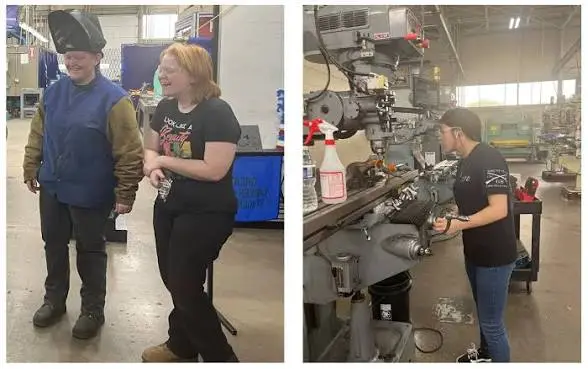
The most important thing economic development organizations need to do is develop strong workforce training pipelines for these high-skilled roles. Dirty Jobs host Mike Rowe has been sounding the alarm bell for this need for more than 16 years. Rowe first testified before both the Senate Committee on Commerce, Science, and Transportation and a House subcommittee, urging members of Congress to address the skills gap in the U.S. workforce.
SALENA ZITO: PITTSBURGH ROBOTICS COMPANY LANDS A $71 MILLION DEFENSE CONTRACT
Back then, his plea fell on deaf ears. But after a lot of persistence, developing a foundation, and insisting that the trades need a public relations makeover, that skills gap is now closing. Since 2017, trade school interest has doubled, and enrollment is up 20% nationwide.
Nowhere in this country are those skills needed more than right here, where the Empire of Light was born — and is already well on the way to being reborn.