
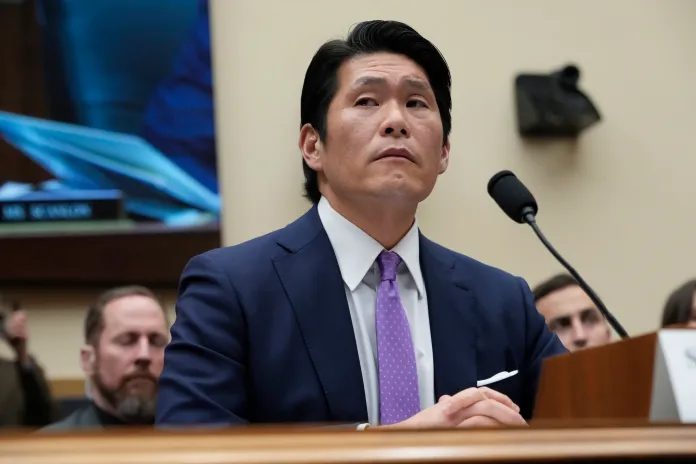
The Federal Reserve’s Board of Governors has enlisted former special counsel Robert Hur to help defend the central bank against Justice Department subpoenas targeting Fed Chairman Jerome Powell, according to court filings unsealed Friday that revealed a federal judge blocked the government’s demands for records.
Hur, a former U.S. attorney who investigated former President Joe Biden’s handling of classified documents, has been working as part of the Federal Reserve’s legal team as the central bank moved to quash subpoenas tied to a criminal investigation into renovations of the Fed’s Washington headquarters.
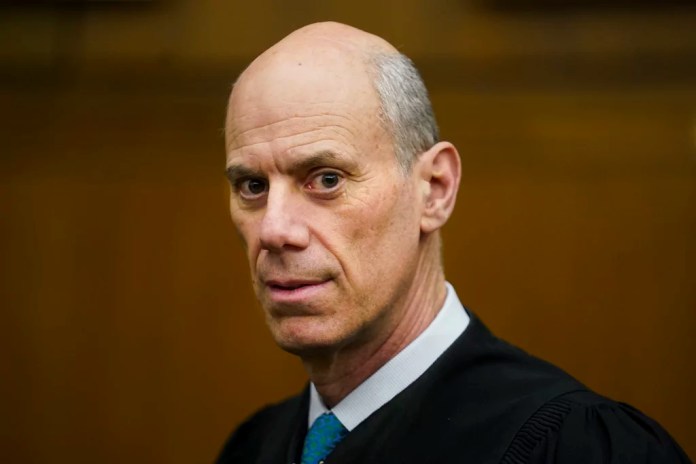
The filings were unsealed Friday after Chief U.S. District Judge James Boasberg, an appointee of former President Barack Obama, ruled that the subpoenas issued by federal prosecutors were improper and should be quashed.
Although it’s unclear when Hur first joined the Board of Governors’ legal defense team, U.S. Attorney Jeanine Pirro said Friday her office had been investigating the case since November. The White House in January defended the investigation into Powell after he released a video claiming he was being targeted in an “unprecedented” inquiry based on “political pressure” and “intimidation.”
In a sharply worded 27-page opinion, Boasberg said the government had failed to present evidence that Powell committed any crime and suggested the investigation was driven by political pressure tied to disputes over monetary policy.
“The government offered no evidence whatsoever that Powell committed any crime other than displeasing the President,” Boasberg wrote, adding that there was “a mountain of evidence” suggesting the investigation was meant to pressure Powell to change course on interest rates or resign.
Hur is one of five members of the legal team from King & Spalding representing the Fed’s Board of Governors, alongside partners including Jeffrey Bucholtz, who has previously represented the central bank in litigation. Powell himself is represented separately by attorneys from Williams & Connolly.
Hur rose to national prominence during Biden’s term when he served as special counsel investigating the discovery of classified documents at the then-president’s home and former office that Biden had retained after leaving the vice presidency. His February 2024 report ultimately declined to recommend charges but sparked a political firestorm after he described Biden as likely appearing to jurors as “a sympathetic, well-meaning, elderly man with a poor memory.”
The former federal prosecutor had been appointed U.S. attorney for Maryland by President Donald Trump during his first administration. Since leaving government, Hur has joined King & Spalding as a partner and has worked on several high-profile matters, including representing Harvard University in litigation against the Trump administration over federal funding and foreign student enrollment.
The subpoenas pertaining to the Fed dispute were issued by the U.S. attorney’s office in Washington, led by Pirro, as part of a criminal investigation examining the Federal Reserve’s roughly $2.5 billion renovation of historic buildings at its headquarters.
Prosecutors sought records related to the construction project and Powell’s July testimony before the Senate banking committee, where he addressed the renovations.
The Federal Reserve board moved to quash the subpoenas in a Feb. 24 filing, arguing that the DOJ’s investigation was part of a broader effort by the White House to undermine the Fed’s statutory independence.
In its motion, the board argued the subpoenas appeared intended to “aid the president’s quest to seize for himself a power specifically denied to him by federal law,” referring to the Fed’s independent authority to set monetary policy.
The legal fight comes amid a long-running feud between Trump and Powell over interest rates. Trump has repeatedly criticized Powell for failing to cut borrowing costs more aggressively and has publicly blamed him for economic headwinds.
Boasberg’s ruling said such public pressure formed part of a broader pattern that raised concerns about the purpose of the subpoenas. He concluded the dominant purpose of the subpoenas appeared to be “to harass and pressure Powell either to yield to the president or to resign.”
In a Sunday evening Truth Social post slamming Boasberg’s opinion, Trump referred to the judge as a “man who suffers the highest level of Trump Derangement Syndrome (TDS), and has been ‘after’ my people, and me, for years.” Trump also took aim at the Supreme Court for striking down his “Liberation Day” tariffs in a recent ruling.
“What Boasberg has done on the ‘Too Late’ Powell case, and many others, has little to do with the Law, and everything to do with Politics,” Trump wrote. “He is exactly what Judges should not be!”
Prosecutors argued the renovation project’s cost overruns raised the possibility of fraud and justified further investigation. But Boasberg rejected that claim, noting that construction projects frequently run over budget and that the Federal Reserve’s independent inspector general had already reviewed the renovation and raised no concerns about fraud.
For now, the decision blocks the subpoenas and leaves the Federal Reserve preparing for the next phase of the legal battle. The DOJ has indicated it plans to appeal the ruling.
Powell’s term as Fed chairman is due to expire in May. While Trump has nominated former Federal Reserve governor Kevin Warsh, Sen. Thom Tillis (R-NC) has said he will not cast a vote for Powell’s replacement until the Powell investigation is complete.
JUDGE JAMES BOASBERG BLOCKS DOJ SUBPOENAS AGAINST FED CHAIRMAN JEROME POWELL
Tillis is the only Republican to formally vow a total blockade and is part of the Senate banking committee that is narrowly split between 13 Republicans and 11 Democrats.