
Gov. Gavin Newsom (D-CA) has spent years cultivating the image of a polished, camera-ready Democrat, equally comfortable with conservative critics as well as selling progressive policies to a national audience.
But as talk of a 2028 presidential run grows, the past week has offered a harsh reminder of a political reality: staying the presumed front-runner is often a lot harder than becoming one.
A string of recent missteps has exposed how quickly Newsom’s carefully crafted image can fray under national scrutiny and how the traits that play well in California’s partisan environment may need recalibrating on a national stage.
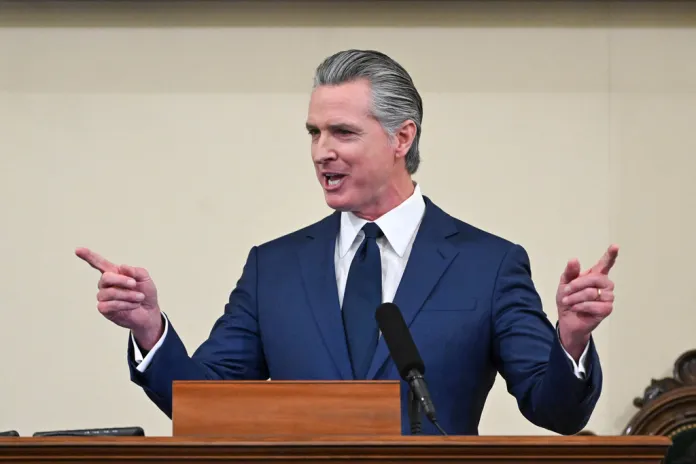
One flashpoint came after comments related to standardized testing sparked accusations of racial insensitivity. During a book tour stop in Georgia, Newsom, speaking with Atlanta Mayor Andre Dickens, who is black, was asked what he wanted the audience and readers to know about him. Newsom said he wasn’t trying to impress anyone, but “just trying to impress upon you, I’m like you. I’m no better than you. I’m a 960 SAT guy.”
The governor then discussed his dyslexia and lifelong struggle to read, but the damage had been done, and he gifted his opponents a ready-made sound bite and talking point.
He was accused of being racist and of calling black people dumb. Former Fox News host Megyn Kelly declared that the comment would “haunt him forever,” while Sen. Tim Scott (R-SC), who is black, slammed him on social media.
“Black Americans aren’t your low bar,” Tim Scott posted on X. “We’ve built empires, created movements, outworked, outhustled and outsmarted people like you. Stop using your mediocre academics as a way to patronize communities.”
Fox News host Sean Hannity, who is white, also got in on the action, posting on X that “@GavinNewsom Thinks a 960 SAT Makes Him ‘Like’ Black Americans. Let That Sink In.”
Instead of turning the other cheek, Newsom unleashed on Hannity in a profanity-laced retort, accusing him of giving President Donald Trump repeated passes when he made racist remarks, but then feigning outrage at Newsom’s statements.
“You didn’t give a s*** about the President of the United States of America posting an ape video of [former President Barack Obama] or calling African nations s***holes — but you’re going to call me racist for talking about my lifelong struggle with dyslexia?” Newsom posted on X. “Spare me your fake f***ing outrage, Sean.”
Newsom’s allies argued the backlash mischaracterized his intent, but critics claimed the episode reflected a broader vulnerability and that a national candidate should anticipate how comments will land beyond a friendly political base.
Making things worse was the response from Newsom’s communications team. The group has been hailed by allies for its aggressive defense of the governor and its brutal and biting takedown of the Trump administration on social media, but has been increasingly criticized by journalists as overly combative.
Public clashes with reporters and sharp responses from his press team have become more frequent, reinforcing a perception of a political operation that defaults to confrontation.
Real Clear Politics correspondent Susan Crabtree shared a screenshot of her email exchange with Newsom’s communications director on X. She asked about the governor’s dyslexia diagnosis.
“Hey Susan — thanks for reaching out,” the response read. “Respectfully, f*** off.”
While the brash style has helped Newsom dominate media cycles and energize supporters in partisan fights, it’s wearing thin as the outgoing governor gets ready to pivot to a national campaign, Democratic strategist Kaivan Shroff told the Washington Examiner. Shroff said Newsom’s schtick of pushing back hard is playing into Republicans’ hands and could ultimately hurt him on a national stage.
Two days after the book tour stop in Atlanta, Newsom drew fresh criticism from members of his own coalition after suggesting on CNN that Democrats should be more “culturally normal” and “less prone to spending a disproportionate amount of time on pronouns.”
The LGBT caucus called it “deeply concerning” for an elected official to define who or what is considered normal. Progressive activists also slammed the governor for being so dismissive of issues central to Democratic organizing.
The episode highlighted a delicate balancing act facing many national Democrats: appealing to persuadable voters uneasy with culture-war politics without alienating core constituencies that form the party’s organizational backbone.
“For a governor widely seen as testing a general-election message ahead of a possible White House run, the reaction underscored how narrow that political lane can be,” political strategist Luke Conners told the Washington Examiner.
But California-based political strategist Garry South, who managed Newsom’s first campaign, called the week’s episodes part of the learning process for the governor and his team.
NEWSOM CALLS JD VANCE AND MARCO RUBIO ‘PHONIES’ FOR TURNING FROM TRUMP CRITICS TO ALLIES
“There are always growing pains when a state elected official starts to lean into national politics, especially a presidential run,” he told the Washington Examiner. “Jimmy Carter, also a [former] governor, gave a Playboy magazine interview in ‘76 in which he admitted he had experienced ‘lust in his heart.’ Would be pretty tame in today’s political world, but the resulting headlines and TV coverage nearly froze his campaign in its tracks — but he still ended up beating an incumbent president.
“Every campaign has to be viewed in balance. There will always be miscues, but staying power is what matters in the end,” South continued. “And Newsom has a top-notch staff that has helped him become both a national figure and a leading candidate for president.”