
The other day, I mentioned to a new acquaintance my work as a TV critic for this magazine. I won’t elide the point: I was bragging. As sometimes happens, however, my boast spun around like a boomerang and knocked my teeth out. “There is much to criticize!” my friend replied with a laugh. That shut me up quickly enough, but it also captured the truths that make this corner of the reviewing business so thrilling and vexed.
There has never been a better time to watch television. Say what you will about shopping malls, pop music, or the fortunes of the American factory worker, TV is one realm in which those of us now living definitively haven’t missed the parade. In 1976, the Emmy for Best Drama went to Police Story, a campy procedural that claimed its prize by beating a Columbo “Sunday Mystery Movie” on NBC. Fifty years later, likely competitors for the award include Pluribus, The Pitt, and Slow Horses, entertaining and finely made choices all.
Of course, one needn’t sit through this year’s offerings to have a wonderful time. At a moment’s notice, those willing to subscribe to a streaming service can binge Mad Men, The Wire, Band of Brothers, and other classics of TV’s golden age. Obscurer but equally strong choices await the viewer willing to dig: Carnivàle, The Americans, Friday Night Lights, and many more. For better and worse, the energy that once belonged to the cineplex now buzzes on our small screens, with all of the industry consequences that that entails. Take the career of actress Carrie Coon. Two generations ago, the 45-year-old would have been a movie star, greatly beloved. Today, she is instead a superb but only half-famous TV performer. Does Coon herself regret the change? Few fans of The Leftovers, The White Lotus, or The Gilded Age do.
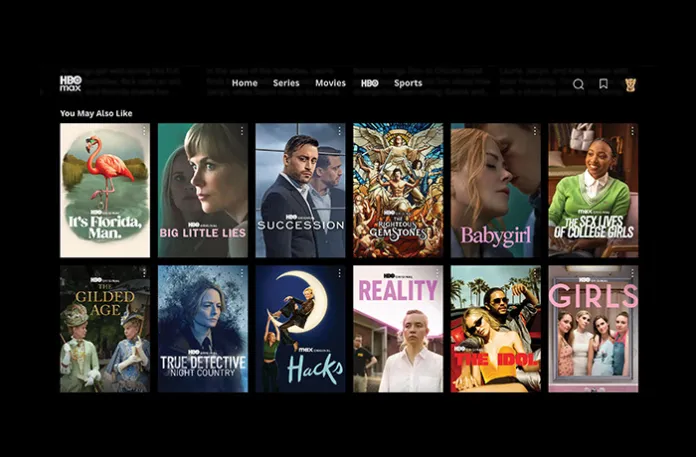
The downside of all of these riches is the dross accompanying the gold. Each year, the nation’s streaming services dump literally hundreds of original drama and comedy series into our queues, to say nothing of the cartoons, stand-up specials, and multipart documentaries on offer. Armed only with flat-bottom pans, we stand in the river and try to catch the jewels drifting by. Though much has been made of audiences’ enslavement to the algorithm, I might suggest that an even stricter master might be best. At last check, the “TV for You” section of my Hulu account had a whopping 76 recommendations, many of which bear no conceivable relation to my viewing habits. (90 Day Fiancé? I’ll pass.) HBO’s “You May Also Like” function produces, as far as I can see, a mere listing of the app’s best-known shows. Why else tell fans of wholesome, earnest ER that they should be sure to check out Veep?
Into this confusion steps the TV critic, bleary-eyed and surly from too many hours on the couch. At his best, he is a godlike figure, delivering us from error by way of decrees. (“Thou shalt not watch the ponderous new Mark Ruffalo miniseries.”) At his worst, he is one more cry from an arrogant elite, assuring us that we will — or should, anyway — enjoy the latest scripted infotainment from the Left.
You already know the kind of show I’m talking about. Perhaps its incorporation of vogue ideas dazzles critics who might otherwise discern its awfulness (Amazon’s Transparent). Or perhaps “representative” casting and plotting blind commentators to all else (FX’s Reservation Dogs). To find an honest assessment of such a program in the American critical ecosystem is like spotting a unicorn … with roller skates … on Mars. Amazon’s The Underground Railroad (2021), a miniseries of almost indescribable spitefulness, didacticism, and hypocrisy, was hailed by reviewers as “necessary” (NPR), “graceful” (Los Angeles Times), and a “breathtaking achievement” (Time). Were those and other writers knowingly lying to maintain their standing on the progressive team? Yes. Yes, they were.
“There is much to criticize!” Returning to our theme, we must follow these nuisances to their conclusion. If algorithms fail and (most) commentators can’t be trusted, then how are audiences to wade through television’s rising flood? For many viewers, the answer involves the scroll session, a joyless tour of “what’s on” that serves as the contemporary equivalent of flipping channels. Cycling through the possibilities, one lingers or leaps ahead based on criteria one can barely define. Is that John Turturro? That thumbnail looks OK. Didn’t we just watch a murder of the week? Before one knows it, the time it takes to stream a pilot has passed, and one has nothing to show for it but a sore thumb.
My own solution to this problem, admittedly specialized, is to play an offscreen version of “Six Degrees of Kevin Bacon.” If Liz Sarnoff wrote two of the best episodes of Deadwood, then maybe her forthcoming series Scarpetta will be pretty good. (Check this space next month to find out.) Surely executive producer Ronald D. Moore (For All Mankind, Outlander, Battlestar Galactica) will knock the next one out of the park, too. Needless to say, this method doesn’t always work: Fans of The Wire have followed creator David Simon from one disappointment (Show Me a Hero) to the next (The Deuce). Nevertheless, it is one path to cut through thick woods. If the television landscape is a forest, I want the trees that might bloom.
Writing for Quillette recently, journalist Harrison Kass asked what has happened to the middlebrow movie, “the kind of impeccably made, crowd-pleasing entertainment” that graced American screens for decades. To be sure, such films are still available if one knows where to find them. But their television equivalents come out nearly every month, gems in a wash of pebbles, pouring unceasingly past. For the TV sophisticate, and with apologies to the Gipper, we live today in a time for choosing. However you do it, choose carefully out there.
Graham Hillard is the TV critic for the Washington Examiner magazine and editor at the James G. Martin Center for Academic Renewal.