
Physician and wellness influencer Dr. Casey Means faced a series of tough questions from Republicans and Democrats during the long-awaited Senate hearing on her nomination to be surgeon general, rounding out President Donald Trump’s public health cabinet.
Means, who was nominated by Trump last May, has been a controversial figure for stepping away from traditional medical practice, after becoming disillusioned with what she described as the healthcare system’s focus on treatment instead of prevention.
Here are some of the highlights from the hearing.
Means’s background and nomination
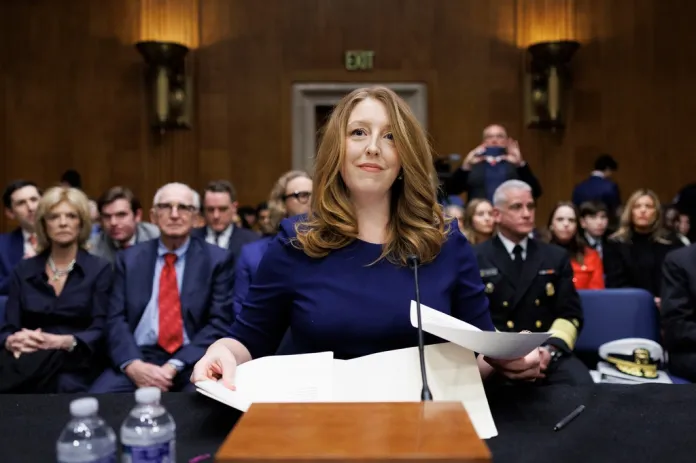
Despite holding a variety of medical research positions, including at her alma mater, Stanford University, Means left her surgical residency program at Oregon Health and Science University in 2018, shortly before completion, and let her medical license lapse in January 2024.
Trump has said on multiple occasions that he let Health and Human Services Robert F. Kennedy Jr. choose Means for the job. She and her brother, White House health adviser Calley Means, have been key players in the Make America Healthy Again movement, particularly on the nutrition elements of Kennedy’s agenda to root out chronic disease.
Means’s initial confirmation hearing scheduled for October was postponed because she went into labor within five hours of the hearing’s start time. Means said that her son, Phoenix, is 17 weeks old and was born on the original hearing date.
Overall, Wednesday’s Senate hearing was intense but appeared to be constructive, with Means taking a conciliatory tone in lines of questioning, seeking to reassure lawmakers on a variety of points, including ones related to in vitro fertilization, abortion, and food production. While questioning was often aggressive, Means appeared to build a rapport with many of the committee members and sought to distinguish personal positions from what she would do in office.
“My dream is first and foremost to help nudge, push, inspire our healthcare system towards focusing on root causes and the reasons why we’re getting sick, moving towards a real healthcare system, and not just a reactive sick care system,” she told senators.
Sen. Roger Marshall (R-KS) said at the start of the hearing that the role of surgeon general is “an educator, a coach, a cheerleader, providing evidence-based guidance to improve health and respond to crises.”
If confirmed, Means would oversee the Public Health Services Commissioned Corps, a uniformed service of over 6,000 public health professionals deployed to states and throughout federal departments.
The surgeon general also traditionally offers advisories on critical public health concerns, such as the obesity epidemic.
Means signaled that she would make addressing metabolic dysfunction, the key driver of obesity, diabetes, heart disease, and more, her focus.
“Public health leaders must address the evidence-based modifiable drivers of chronic diseases, which include ultra-processed foods, industrial chemical exposure, lack of physical activity, chronic stress and loneliness, and over-medicalization,” Means said. “I’ve been asked to help our nation get healthy and answer the call of millions, especially mothers who are begging for transparency and support. That is what I’m here to do.”
Vaccines and autism: “We should not leave any stones unturned.”
Senators on both sides of the aisle pressed Means on vaccines. Means said multiple times that she supports vaccines and believes they are “a key part of our public health strategy” but that parents are looking for “a nuanced conversation” about risks and benefits.
When asked by Senate Health, Education, Labor and Pensions Committee Chairman Bill Cassidy (R-LA) at the start of the hearing about the connection between vaccines and autism, Means said vaccines are “not part of [her] core message” but that “we should not leave any stones unturned.”
“The reality is that we have an autism crisis that’s increasing, and this is devastating to many families, and we do not know as a medical community what causes autism,” Means said.
When Cassidy pressed Means on the existing body of evidence that suggests there is no connection between vaccines and autism, Means said that science is always improving.
“I also think that science has never settled, and I think that the effort to look at comprehensive, cumulative exposures of our exposome into what is causing autism is important,” Means said. “I look forward to seeing those results and sharing the best public health information with the American people.”
Sen. Tim Kaine (D-VA) also pressed Means on Kennedy’s claims that the influenza vaccine does not reduce hospitalization.
“Does it reduce the risk of injury or hospitalization?” Kaine asked.
“At the population level, I certainly think that,” Means said, not saying whether or not she believes it has individual benefits.
Approval of abortion pill and oral contraception
In response to a line of questioning from Cassidy, Means declined to answer whether she believes the abortion drug mifepristone should only be prescribed after an in-person visit with a healthcare professional.
“I think that every medication has risks and benefits,” she said. “I think that all patients need to have a thorough conversation with their doctor and have true informed consent before taking any medication. The question of whether it should be an in-person visit is out of the purview of the surgeon general’s office.”
About contraception medication, Means said she “absolutely” believes contraception methods approved by the FDA should remain accessible. She told Sen. Patty Murray (D-WA) that she does not believe all women are at risk when they take contraception, but that doctors must identify at-risk individuals before prescribing such medication.
“I’m speaking about particular women that can be hurt if there is not informed consent about their medical history, their lifestyle exposures, and their family history,” she said. “I want those women, and I know you do too, to be able to have a thorough conversation with their doctor and know whether they are at higher risk for side effects when prescribed the medication.”
Kaine also questioned Means on her thoughts on IVF, to which she responded that she knows the Trump administration “is strongly in favor of IVF.”
“I think people should have access to the best quality fertility treatments,” Means said. “And also, my core message has been about how we are missing the mark on our fertility conversation.”
Mullin to Sanders: “You’re part of the problem.”
Sen. Markwayne Mullin (R-OK) tore into Sen. Bernie Sanders (I-VT) during the hearing, saying he has contributed to the systemic failures of the healthcare system.
Sanders pressed Means on whether she would support his efforts for a universal socialized medicine system, and Mullin, during his questioning, slammed Sanders and Democrats for Obamacare.
“The problem is you supported the same tools that got us to where healthcare is unaffordable because ACA, ‘affordable healthcare,’ which is completely unaffordable, has risen three times faster than inflation itself,” Mullin said.
When Sanders criticized Mullin for personally attacking him, Mullin responded by saying the senior senator could have “fixed this a long time ago,” given how long he has been in office.
“I don’t care about your opinion,” Mullin said. “You’re part of the system. You’re part of the problem. You’ve been sitting here longer than I’ve even been alive.”
Sanders was elected to the House of Representatives in 1991 and to the Senate in 2006. Mullin was born in 1977.
MAHA and Glyphosate
Both Republicans and Democrats asked Means about the herbicide glyphosate, the main chemical in RoundUp, which has been dragged through litigation over accusations that it causes cancer.
Means, like Kennedy, has been a staunch opponent of the heavy use of glyphosate in U.S. agriculture for desiccation, spraying the herbicide on crops to make it easier to harvest.
Trump signed a controversial executive order last week that would ramp up domestic production of glyphosate, which has been perceived as a betrayal by MAHA advocates.
Sen. Ed Markey (D-MA) pressed Means on whether or not she supported the president’s moves. Means said addressing chemical exposures in food is “a core passion” of her life but must be balanced with the needs of the agricultural sector for food security.
“I think there’s grave issues with these chemicals,” Means said. “I think that we are in a very complicated moment for agriculture and food. We cannot overturn the entire agriculture system overnight. That would hurt farmers. It would hurt food prices. This is a national security issue.”
Using psychedelics
Sen. Susan Collins (R-ME) pressed Means about her past use of psychedelics, questioning what her stance on “illicit” drugs would be if confirmed as surgeon general. Collins specifically expressed concern about Means’ 2024 book, Good Energy: The Surprising Connection Between Metabolism and Limitless Health, in which the senator said the surgeon general nominee wrote about “using illicit psychedelic mushrooms.”
Means replied that she differentiates beliefs as a private citizen from “what I’d say as a public health official,” and said she would “certainly” not recommend psychedelics to the public in her role.
“The purpose of this role is to communicate absolutely the best evidence to the American people to keep them safe, thriving, and healthy,” Means said. “And when it comes to psychedelic therapy for mental health issues, I think the science is still emerging, and so it would certainly not be a recommendation to the American people to do that under no circumstances.”
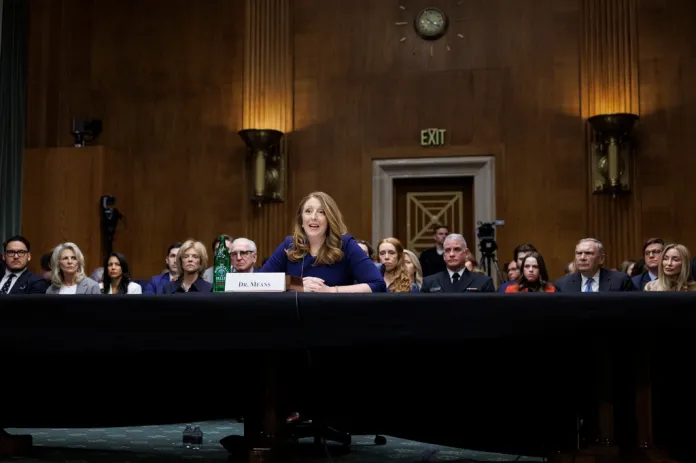
Targeting infertility: IVF versus lifestyle changes
Sen. John Hickenlooper (D-CO) pressed Means on IVF, expressing concern that the Trump administration’s approach to healthcare might cause women to delay having children. He said that in promoting lifestyle changes that could address root causes of infertility, federal health officials might be discouraging IVF treatment for women who need it.
“How much time should a woman of childbearing age take to suffer self-reverse a fertility struggle that may ultimately serve as a further setback to them growing their family?” he questioned. “For families like mine, where a child birth would have been impossible without IVF, I think it’s potentially damaging to widely spread a message that if only we made lifestyle changes, we would conceive naturally.”
ANTI-ABORTION GROUPS FACE MAJOR TEST OVER OBAMACARE SUBSIDY LEGISLATION
Means described IVF as “miraculous” and said she believed it should be widely accessible to women. But she reiterated that promoting education about environmental effects on fertility and lifestyle factors at play forms an essential piece of targeting childlessness.
“The American people deserve to, and I think want to have information from medical authorities about what is possible and what the evidence shows in terms of what environmental factors are affecting these issues,” she said. “That does not mean that all infertility cases can be reversed by lifestyle changes.”