
At least 31 people were killed after a suicide bomber detonated in a Shiite mosque on the outskirts of Islamabad, Pakistan, one of the country’s deadliest attacks targeting the capital in recent history.
While Pakistan has been plagued by sectarian violence in recent years, it has largely been restricted to the ethnic Baloch areas in the southwest and along the border with Afghanistan. A November terrorist attack in Islamabad was the first of its kind in years, killing 12 people and wounding 35, but Friday’s terrorist attack was much deadlier. A senior Pakistani police official gave the figure of at least 31 people dead and 169 wounded, many of them critically.
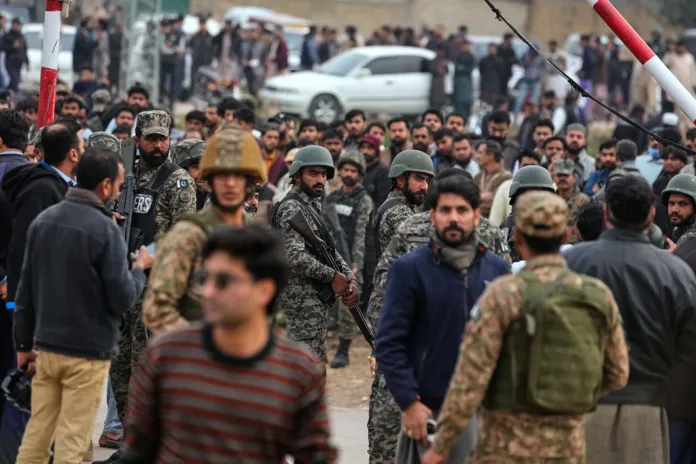
The suicide bomber attempted to enter the mosque of Khadija al Kubra during Friday prayers, but was prevented from entering. He detonated his explosives at the crowded mosque’s entrance.
Pakistani Prime Minister Shehbaz Sharif voiced his condolences over the attack, pledging that those responsible would be “identified and punished.” Pakistani President Asif Zardari called the attack a “crime against humanity,” saying the country stands with the affected families.
The bombing occurred as Sharif was attending an event with Uzbekistan President Shavkat Mirziyoyev just miles away.
No group has yet claimed responsibility, but the most likely culprits of the attack are the Pakistani Taliban or ISIS. The Pakistani government blamed Afghanistan and India for helping to facilitate the last bombing in November, which led to a limited bombing campaign against Afghanistan. The Afghan Ministry of Foreign Affairs quickly issued a condemnation of Friday’s attack.
“The Islamic Republic of Afghanistan condemns such attacks that violate the sanctity of sacred rituals and mosques and target worshippers and innocent people,” it said.
If Islamabad connects Afghanistan with the attack, it could revive the cross-border conflict that has grown increasingly fierce over the past few years. Hundreds of people were killed in clashes last year.
Raja Nasir, a top Shiite leader, criticized the Pakistani government over the attack, blaming it for security failures.
TALIBAN VOWS TO RESPOND AFTER ALLEGED PAKISTANI STRIKES ROCK AFGHANISTAN OVERNIGHT
“Such a terrorist act in the federal capital is not only a serious failure in protecting human lives but also raises significant questions about the performance of the authorities and law enforcement agencies,” he said.
Friday’s bombing was the deadliest terrorist attack targeting Islamabad since 2008, when a suicide bomber killed 63 people and wounded 250 others in and around the city’s Marriott Hotel.