
The United Kingdom and China are cutting some red tape on travel and imports as both nations seek to counterbalance the mercurial United States, sweeping concerns about Beijing’s conduct under the rug for now.
British Prime Minister Keir Starmer played nice with Chinese paramount leader Xi Jinping on Thursday at the Great Hall of the People in Beijing, where he expressed a desire for a “more sophisticated relationship” with the Communist power.
“We had a very good, productive session with real, concrete outcomes, and it was a real strengthening of the relationship,” Starmer said following the meeting. “And that’s in the national interest, because of course there are huge opportunities here in China as the second biggest economy in the world.”
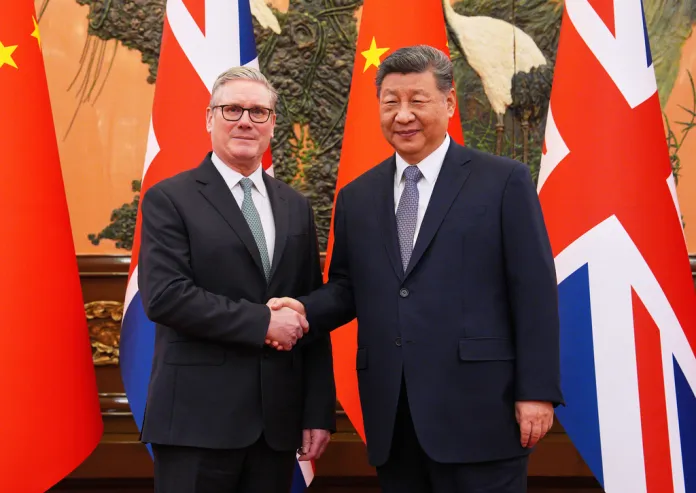
The most prominent outcome of the exchange was an agreement to implement visa-free travel for British travelers in China. Both sides also noted that China will be halving its import tariffs on Scottish whiskey.
Starmer, who brought an entourage of business leaders with him, championed these developments as a breakthrough for British companies seeking to expand operations, calling China a “vital player on the global stage.”
While the state visit was planned long in advance, it comes at a crucial moment as U.S. President Donald Trump upsets the status quo of trans-Atlantic partnership.
The president’s demands for sovereignty over Greenland, use of scatter-shot tariffs as bargaining chips, and criticism of fellow NATO partners as freeloaders have soured European nations’ attitudes toward the United States.
China has experienced a swelling of interest as middle-power Western countries now look East for economic partnerships. Canadian Prime Minister Mark Carney made overtures to China earlier this month, agreeing to a “strategic partnership” for greater mutual investment.
Xi, referencing the U.K.’s decades of soft opposition to Chinese foreign policy, told Starmer that although “China-UK relations went through some twists and turns that did not serve the interests of our countries,” they must now “rise above their differences.”
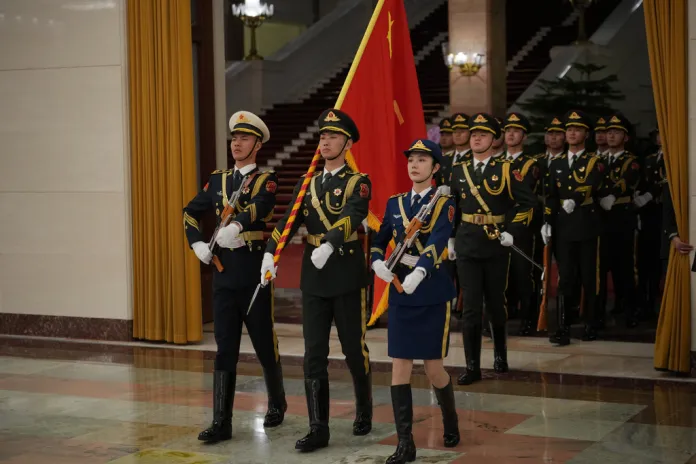
It was a thoroughly friendly exchange by all accounts — despite a slew of ambient concerns, such as accusations of Chinese espionage in the U.K., British citizen Jimmy Lai still imprisoned in Hong Kong, and countless human rights abuses linked to the Chinese Communist Party.
Starmer told Xi ahead of the meeting that it was crucial to “identify opportunities to collaborate” while also allowing a “meaningful dialogue on areas where we disagree.”
Those areas where Starmer and Xi disagree got little to no spotlight.
Starmer told reporters he had a “respectful discussion” with Xi about the imprisonment of Lai, but no further details were offered.
“We raised those issues, as you would expect,” Starmer told the press. “Part of the rationale for engagement is to make sure that we can both seize the opportunities that are available, which is what we’ve done, but also have a mature discussion about issues that we disagree on.”
Xi reportedly promised the prime minister that “no matter how much China develops and grows stronger, it will not pose a threat to other countries.”
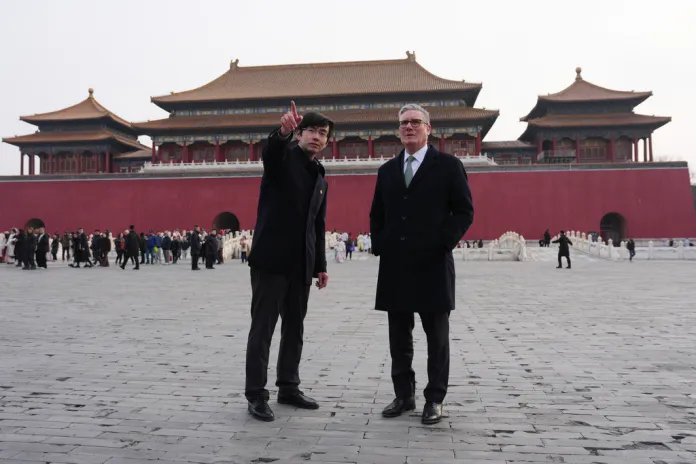
XI JINPING’S PURGE OF GENERALS SETS GRIM TONE FOR ANNUAL COMMUNIST PARTY MEETINGS
That promise might not offer much assurance to critics of the Chinese “super embassy” soon to be built on the former site of the Royal Mint in London. Security experts have warned that the planned facility, which would be approximately 215,000 square feet in size, could be used as a central headquarters for espionage and harassment of overseas Chinese nationals.
Security Minister Dan Jarvis rebuked critics of the embassy’s development, saying it will replace multiple diplomatically accredited facilities across the city run by the CCP and thereby centralize national security concerns into one location.