
A number of ISIS prisoners escaped from prisons operated by the Kurdish Syrian Democratic Forces amid fighting with Syria’s largest city of Damascus.
The fate of over 50,000 ISIS prisoners, held in prison camps in northeastern Syria, has been of paramount concern to the United States since the collapse of the caliphate in 2018. These concerns increased after the fall of the Assad authoritarian dynasty, with fears growing that any transfer could facilitate their escape. These fears were vindicated after government forces launched an offensive against SDF territory over the past week, as reports emerged of ISIS fighters taking advantage of the chaos to break free.
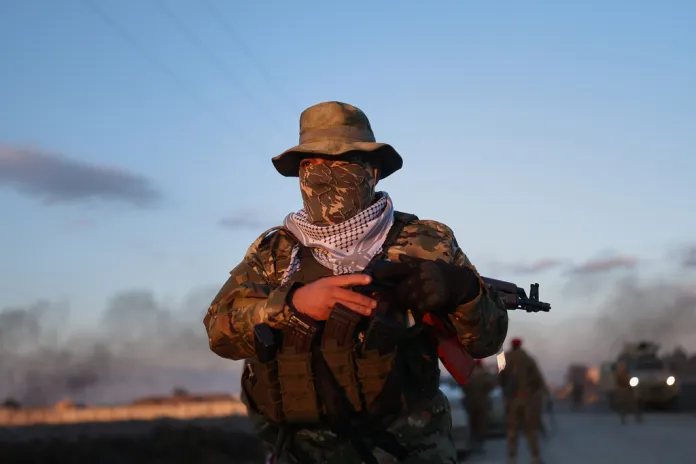
The Syrian Observatory for Human Rights claimed that tribal fighters affiliated with the government attacked Al Shaddadi prison, then proceeded to free the ISIS prisoners inside. It published footage of fighters opening the gates and prison doors and moving around inside.
Damascus gave a conflicting account, with the Operations Command of the Syrian Arab Army claiming it was actually the SDF who released ISIS prisoners, according to a statement sent to the Syrian Arab News Agency.
“Army forces began entering the city of al-Shaddadi in the Hasakah countryside after the SDF released members of the Islamic State from al-Shaddadi prison,” the army said.
“The SDF was held fully responsible for releasing the members of the Islamic State from al-Shaddadi prison, and the army confirmed that it would do what was necessary to restore control of the area,” it added.
The SDF denied the charge, countering that not only did government forces free ISIS fighters but had ISIS fighters among them. It also accused government fighters of “beheading prisoners from our forces and recording it on video … in the style of ISIS.”
Syrian President Ahmed al Sharaa held a phone call with President Donald Trump on Monday as fighting flared back up. Al Sharaa’s office released a statement about the call, though it offered only a vague outline.
“The two Presidents emphasized the importance of preserving the unity and independence of Syrian territory and supporting all efforts aimed at achieving stability,” the statement read. “Both sides stressed the necessity of guaranteeing the rights and protection of the Kurdish people within the framework of the Syrian state.”
“The two parties agreed to continue cooperation in combating the terrorist organization ‘ISIS’ and ending its threats,” it added.
Trump didn’t comment on the call on Truth Social as he often does during significant calls.
The legions of ISIS prisoners in Kurdish areas, most of which have fallen or are soon due to fall to government forces, pose a “huge regional threat,” analyst Kamaran Palani of the London School of Economics Middle East Centre told Al Jazeera.
“These families, based on my fieldwork and research, as well as their members and ISIS prisoners in Raqqa and residents remaining still in al-Hol, they would be very happy to be integrated into the Syrian state, because this is the kind of state that’s familiar to them, and they have got groups that they can access and partner with … And this is going to be a huge regional threat beyond Syria,” Palani said.
“And we are not talking about a few hundred ISIS prisoners; we are talking about thousands of them,” he said. “And we are also talking about thousands of family members belonging to these armed groups.”
A 2024 report by Amnesty International outlined 27 detention centers and two camps that housed alleged ISIS members. These contain 8,950 male ISIS members and 43,250 “non-combatants, including approximately 25,000 children under 12 years old,” according to the State Department. Many of the women and children include wives of ISIS fighters and others who have been indoctrinated into the ideology. The alleged ISIS detainees hail from around 60 countries.
Part of the ceasefire agreement signed by the Kurds on Sunday was the transfer of ISIS prison facilities to government forces. The ceasefire has struggled to hold, however, with both sides accusing the other of almost immediately violating it.
Fighting resumed after a meeting between al Sharaa and SDF Commander-in-Chief Mazloum Abdi went south, reportedly after the president refused a demand for a weeklong grace period to allow Abdi to discuss specifics of the Monday ceasefire agreement with other SDF officials.
Sen. Lindsey Graham (R-SC) was harshly critical of the government’s offensive against Kurdish areas, vowing to impose “sanctions on steroids” if it continued.
KURDISH SDF FORCES AGREE TO CEASEFIRE WITH SYRIAN GOVERNMENT AFTER OFFENSIVE
“Apparently no one in Syria is listening to me or other U.S. government officials,” he said in a post on X. “If this continues, not only will there be bone-crushing sanctions, it will permanently damage relationships between the U.S. and the new Syrian government. If you think we’re BSing – keep it up.
“I’ve tried to be fair to the new government, but apparently it’s falling on deaf ears. If you want a conflict with the U.S. Senate and to do permanent damage to the U.S.-Syria relationship – keep going. If you want to salvage the relationship, stop and turnaround,” Graham said.