
Secretary of State Marco Rubio said that it is impossible for the United States to retrieve 137 Venezuelan men who were deported by the Trump administration in March, warning that any attempt to do so would jeopardize fragile negotiations following the collapse of the Nicolas Maduro regime.
In a sworn legal declaration submitted to federal court late Monday evening, Rubio said the men, who were removed from the U.S. in March under the Alien Enemies Act and later transferred from El Salvador back to Venezuela in a July prisoner swap, are now beyond the practical and diplomatic reach of the U.S. government.
The secretary said the situation has only grown more complex after U.S. forces captured Maduro and his wife on Jan. 3 and transported them to Manhattan to face federal drug-trafficking charges, triggering a rapid and unstable transition of power in Caracas.
Rubio described relations with Venezuela as being in a “delicate” state of flux and warned that raising the fate of the deported men in early talks with the country’s new leadership could undermine broader U.S. objectives.
“Any effort to inject the fate of the 137 men into nascent negotiations with Venezuela’s new leader, Delcy Rodriguez, would risk material damage to U.S. foreign policy interests,” Rubio wrote.
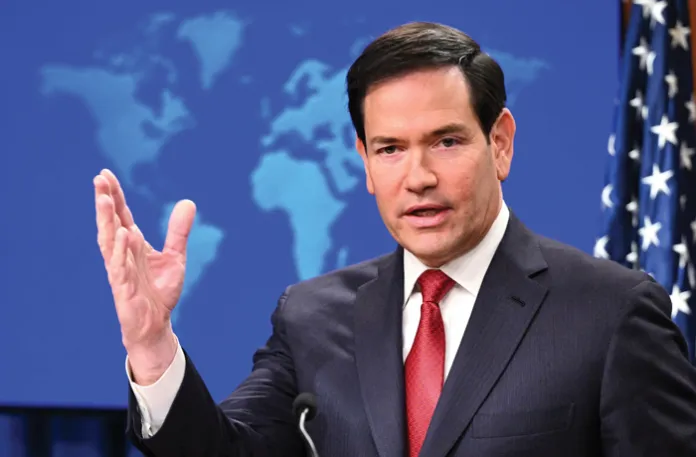
“The United States remains involved to see changes in Venezuela that are beneficial to the United States and that it also expects will be beneficial for the people of Venezuela, who have suffered tremendously,” he said. “These efforts entail ongoing, intensive, and extraordinarily delicate engagement with elements within the regime of Maduro’s successor, so-called Acting President Delcy Rodriguez.”
The filing underscores the administration’s position that immigration enforcement and foreign policy decisions cannot be disentangled from national security concerns and that all of those are solely under the federal government’s purview.
The declaration was submitted in response to U.S. District Judge James Boasberg, an appointee of former President Barack Obama who ruled last year that the abrupt deportation of the 137 men violated their due process rights and defied his order to keep them in U.S. custody. Boasberg has insisted that, despite the men’s return to Venezuela, the government remains obligated to provide them a chance to challenge their removals.
Boasberg suggested two possible remedies. One included returning the men to the U.S. for hearings, and the other was arranging remote bond proceedings from Venezuela. The Trump administration has flatly rejected both options.
Rubio said remote hearings would be impossible not only because of the sensitive diplomatic environment but also because of security and integrity concerns, including the risk of “intentional interference by anti-American elements.”
Justice Department lawyers echoed those warnings in a filing late Monday, saying remote proceedings for 137 individuals would be unprecedented and unworkable. They argued that the lack of an active extradition treaty with Venezuela would make it nearly impossible to verify witness identities, enforce perjury laws, or ensure the integrity of testimony.
The administration’s filing amounts to a direct rejection of the remedies Boasberg proposed, setting the stage for another escalation in a monthslong standoff between the judge and Trump administration officials over the deportation of suspected criminal gang members.
DOJ REQUESTS DELAY IN RETURNING DEPORTED VENEZUELANS TO US AFTER MADURO ARREST
Trump has publicly called for Boasberg’s impeachment over his handling of the case, and the judge is separately overseeing a contempt inquiry into whether administration officials unlawfully defied earlier orders blocking deportation flights to El Salvador.
While Boasberg has yet to rule on the administration’s latest submission, DOJ lawyers signaled they are prepared to immediately seek appellate intervention to block any order compelling the executive branch to take further action.