
Iranian officials stressed their preparedness for war with the United States while expressing hope that negotiations could prevail.
“We are not looking for war, but we are prepared for war — even more prepared than the previous war,” Iranian Foreign Affairs Minister Abbas Araghchi told a gathering of ambassadors in Tehran, referring to the 12-day war with Israel, which saw most of its top scientists and Islamic Revolutionary Guard Corps commanders assassinated and its military and nuclear infrastructure degraded.
“We are also ready for negotiations, but negotiations that are fair, with equal rights and mutual respect,” Araghchi added.
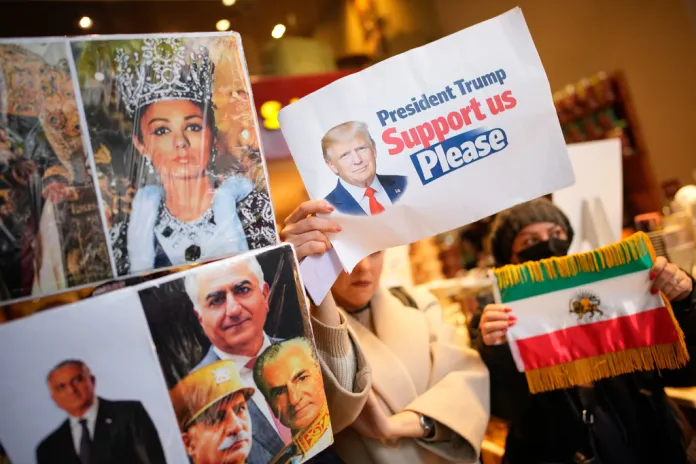
Attention has shifted to U.S.-Iran nuclear negotiations after two weeks of increased tensions, triggered by some of the largest and most violent protests against Tehran since the 1979 revolution. President Donald Trump’s threats to intervene to protect Iranian protesters have ratcheted up tensions, with Iranian officials threatening retaliation if any intervention is carried out.
Esmail Baghaei, an Iranian Foreign Affairs Ministry spokesman, echoed this sentiment on Monday.
“Iran has never left the negotiating table, but it will not engage in one-sided negotiations,” he said at a news conference.
Tehran further indicated on Monday that communications channels are still open between Araghchi and U.S. Special Envoy Steve Witkoff. Two sources familiar with the situation told Axios that the pair spoke over the weekend and discussed the protests.
The nationwide protests, which began on Dec. 28, 2025, have become the fastest-escalating and deadliest protest wave since the 1979 revolution. The U.S.-based Human Rights Activists News Agency put the death toll at 503 protesters over just two weeks, though the true total is believed to be much higher. Iranian state media confirmed that over 100 security forces have been killed.
IRAN HARDENS RESOLVE AS TRUMP THREATENS ACTION OVER PROTESTS: WHAT TO KNOW
Tehran instituted an internet blackout and suppressed Starlink terminals to cover up its crackdown, but videos have trickled out showing security forces shooting protesters and hundreds of corpses lying out in hospitals and morgues. The true death toll is believed to be in the thousands, with security forces using automatic weapons with live ammunition against protesters. Over 10,000 citizens have been confirmed arrested.
Trump said Tehran was “starting to cross” his red line, arguing, “There seems to be some people killed that aren’t supposed to be killed.”
“We are looking at it very seriously, the military is looking at it, and we’re looking at some very strong options,” he said on Air Force One on Sunday. “I’m getting an hourly report, and we’re going to make a determination.”
The protests began in response to an economic collapse, with the Iranian Rial losing a huge amount of its value. The rial has lost over half its value against the U.S. dollar over the past year, according to the New York Times, and inflation reached over 42% in December 2025. Conditions were further exacerbated by recent military defeats, crippling sanctions, corruption, and an unprecedented water crisis.
In a move that exemplified the regime’s poor position, the government announced it would give the citizenry the equivalent of $7 per month to improve their conditions.
The $7 monthly subsidy will cover 100 eggs, a kilogram of red meat, or a few kilograms of rice or chicken at current prices in Iran, according to the outlet. Iranians’ minimum needs cost roughly $200 a month.
One of the major differences in this round of protests has been the role of Reza Pahlavi, the son of the last shah of Iran and the current claimant to the throne. Although he has supported previous protests, this has been the first time that widespread chants calling for his return have been recorded. He has coordinated some protests from the U.S.
Some of the recorded chants invoking him include, “This is not the last battle, Pahlavi is returning,” “Iran has become ready, give the command, Prince,” and “Long live the Shah!”
IRANIAN OFFICIAL THREATENS PREEMPTIVE STRIKE AFTER TRUMP VOWS TO DEFEND PROTESTERS
However, the toppling of the Islamic Republic is far from guaranteed. Aside from its lethal crackdown, Tehran has also utilized its base of support, calling out tens of thousands of protesters in favor of the regime. The anti-government protesters have been denounced as terrorists supported by Israel and the U.S.
Pro-government protesters were joined on Monday by Iranian President Masoud Pezeshkian, who marched with them in Tehran. He has sought a carrot-and-stick approach, posing as a united front with the government while expressing sympathy with the citizens’ economic plight and promising reforms. He said the government is “ready to listen” to protesters while pledging a harsh response against “terrorist elements” and “rioters.”