
During the first season of Landman, we encounter the protagonist, Tommy Norris, hooded and shackled, delivering a lecture to his Mexican cartel captors. The kidnappers are as unhappy that Tommy is building oil pumpjacks on West Texas land they have been using to smuggle drugs and migrants into the United States as they are unconvinced that his bosses will come to his rescue.
“It costs six million to put in a new well,” Tommy, played to curmudgeonly perfection by Billy Bob Thornton, patiently explains. “They’re putting in 800 right f***ing here. That’s 4.8 billion in pumpjacks. They’ll put in another billion on water and housing and trucking. At $78 a barrel, that’s 6.4 million a day for the next fifty f***ing years. So, yeah, the oil company’s coming.”
Even more unhappy but now seemingly persuaded, the hoodlums grudgingly release Tommy.
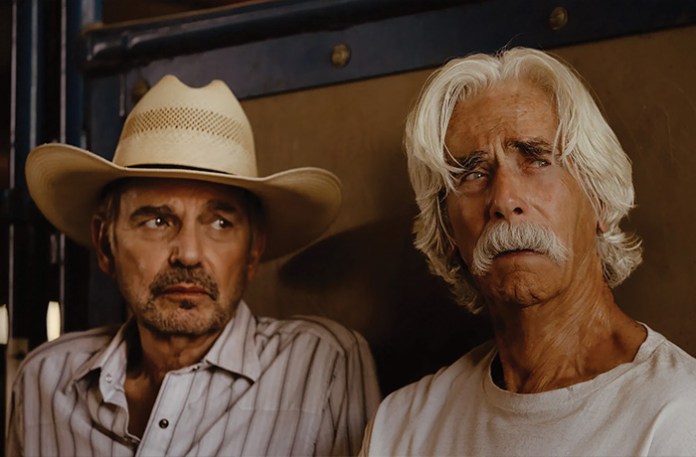
This exchange exemplifies both the affect of Tommy and the spirit of the show, which is set in the Permian Basin around Midland and Odessa: confident, self-assured, and more than a bit preachy. Both Tommy, the landman, essentially the on-the-ground fixer for the M-Tex Oil Company, a large independent producer, and Taylor Sheridan, the showrunner, celebrated for Yellowstone and an ever-expanding panoply of other popular shows, exude a certain cockiness throughout the show’s first eight episodes.
But in the second season of the series, which wrapped last Sunday, a new sense of uncertainty, reflection, and maturity grips the central characters, making for even better television.
Take Tommy, who is buffeted by professional and personal crises that bridge the two seasons as he gradually learns to come to grips with both. First, Monty Miller (a suave, anguished Jon Hamm), Tommy’s lifelong friend and billionaire founder of M-Tex, dies suddenly, but not before naming the fixer as the new company president. Reluctant to abandon his quotidian duties as landman — covering up single-engine airplane crashes on M-Tex property, paying out the families of employees blown to bits when wells explode, handling the pesky cartel — and annoyed by his three-hour commute to company headquarters in Fort Worth, Tomy faces the tension between management and “real work” that many professionals confront on a daily basis. More than once, he is outwitted in his new role, a position to which he is unaccustomed.
Then, at the urging of his fiery ex and future wife Angela (a fetching and charismatic Ali Larter), Tommy retrieves his father from a nursing home in the Panhandle and invites him into the spec house in Midland that he, Angela, and their daughter Ainsley (an adorable Michelle Randolph) share with the company lawyer and Tommy’s deputy, Dale (the folksy Sheridanverse stalwart James Jordan). T.L., the father (played with pathos and dignity by the inimitable Sam Elliott), is a broken man with a broken relationship with his son, stemming from his deceased wife’s terrible struggles with addiction. Over the course of the season, Tommy and his father slowly tighten their bond, a process punctuated with darkly comic lines that both puncture and reflect Thornton’s and Elliott’s undeniable chemistry and gravitas.
Tommy’s son Cooper also has some growing up to do. Season One concludes with the Texas Tech geology graduate abandoning a well crew after tragedy strikes, only to achieve rapid success in his personal and work endeavors. He falls hard for Ariana (Paulina Chavez), a single mother, and sets out to realize his dream as a wildcat driller. But after striking black gold and becoming an overnight millionaire, he learns hard lessons in life and love.
Enter Cami Miller, Monty’s widow (Demi Moore, in the middle of a striking career resurgence). Long shielded by her husband from the nitty-gritty of a figuratively and often physically dirty industry, Cami must transform herself from dutiful wife to energy executive powerhouse. She also has to unwind the company’s tangled finances and, with Tommy’s help, navigate the vicissitudes of offshore leases, insurance riders, regulatory burdens, and predatory lenders to right the M-Tex ship.
THE LONG SHADOW OF THE FEDERALIST DEBATES
The second season of the show is not without its faults. For one thing, the hijinks of Angela and Ainsley are charming and even hilarious in the first season, but they grow tiresome across the arc of the second season. (Greg Gutfeld quipped, less charitably, “Hey @grok remove all the romantic scenes from Landman and add a plot line where the mother and daughter disappear in the Bermuda Triangle.”) Then again, Tommy’s attempt to explain to Cooper how, where, and why he went wrong in negotiating financing for his exploration project is somehow both unclear and too lengthy. And his interactions with the new cartel boss, Dan Morell (a dashing and menacing Andy Garcia), are uneven at best; the chemistry Tommy enjoys with T.L. vanishes when Dan enters the frame.
But on balance, the show’s second season delivers. As T.L. sagely counsels Tommy at a truck stop in the penultimate episode, “What’s your hurry, son? All those problems you’re racing home to fix is still problems when you get there. And once you solve ’em, there’s a whole new set right behind ’em.” It could benefit us all to heed T.L.’s final bit of fatherly advice: “You got to enjoy the moments between the problems.” Even hardened roughnecks, it seems, can grow up.
Michael M. Rosen is an attorney and writer in Israel, a nonresident senior fellow at the American Enterprise Institute, and the author of Like Silicon From Clay: What Ancient Jewish Wisdom Can Teach Us About AI.