
President Donald Trump’s boast about ending the Israel-Hamas war was a bit premature.
Trump, on Oct. 13, addressed the Knesset in Jerusalem. The speech to the Israeli legislature marked the implementation of a landmark ceasefire and hostage deal in the Gaza Strip that the Trump administration helped negotiate, a bit over two years after the Oct. 7, 2023, Hamas terrorist attacks on Israel.
The president proclaimed the war’s end as the “historic dawn of a new Middle East,” signaling a shift from an “age of terror and death” to an era of “faith and hope.”
That could all still happen. But it’s going to be a lot more difficult than Trump said at the time, as many Middle East experts and even casual observers have warned.
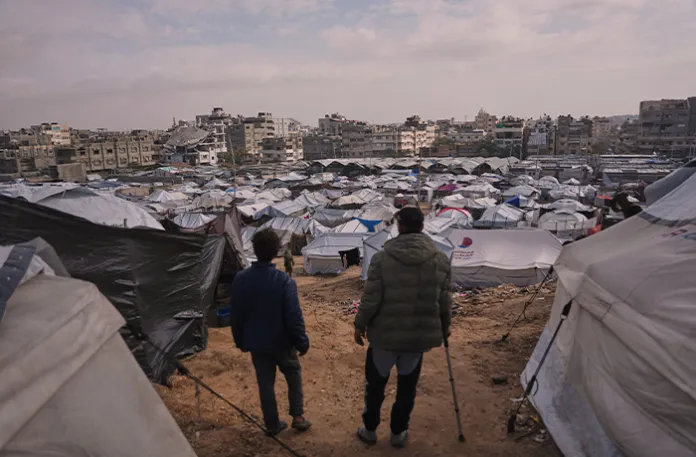
After all, it’s now been over three months since Trump unveiled his 20-point ceasefire proposal for Gaza. But officials have yet to explain how key aspects would function in practice, or how to address Hamas’s entrenched presence in Gaza, from which it launched the Oct. 7 terrorist attacks on Israel that claimed more than 1,200 lives, with 251 people in the Jewish state taken hostage. The next day, Iranian-backed Hezbollah launched missile attacks from Lebanon, part of what became Israel’s seven-front defensive war against Tehran and Houthi rebels in Yemen, among others.
Problems facing the Gaza plan are legion, including whether an international stable of troops would actually be willing to confront Hamas in efforts to dislodge it from the enclave that abuts Israel, Egypt, and the Mediterranean Sea.
“The level of trust in Israel of an international force that will disarm Hamas is very low,” said Shmuel Rosner, a leading Israeli political analyst, in an interview. “For Israeli decision-makers, the strategy now is to let it collapse, without Israel having to take any measures to help it collapse.”
“If Israel does something to disrupt the process, it will be blamed for its collapse,” added Rosner, a Tel Aviv-based columnist, editor, and think tank fellow.
“But it’s fairly clear that disarming terrorist groups is a very tricky thing to do,” said Rosner, author of the new book Why Am I a Jew? A Contemporary Guide for the Perplexed. “You need somebody with the ability and willingness to shoot. If the international force is not willing to go into Gaza and shoot, there’s no point in going through this whole exercise.”
Stalled progress
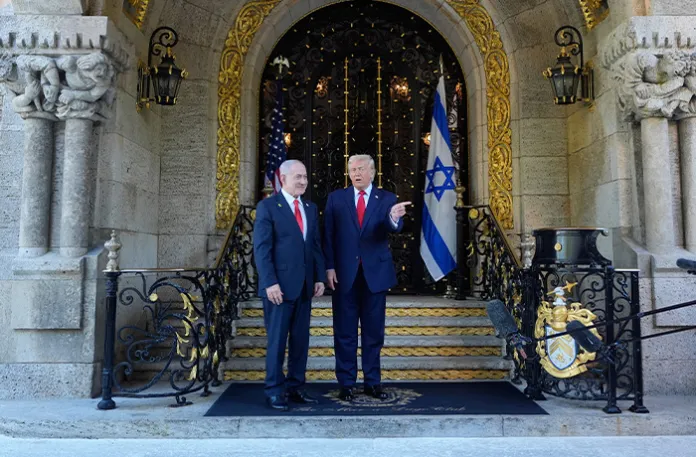
Under the plan, Gaza’s governance would be overseen by a Trump-led “Board of Peace,” followed by an international executive board expected to include Jared Kushner and White House special envoy Steve Witkoff. Beneath the board would sit a technocratic Palestinian government of approximately a dozen Palestinians who are not affiliated with Hamas.
But as Trump focuses on handpicking members for his ideal Palestinian governing body, experts said the administration has offered little clarity on how this layered structure would actually govern Gaza — or, more consequentially, how it can operate while armed Hamas terrorists remain in control of much of the enclave.
Israel controls 53% of Gaza, as demarcated by the “Yellow Line,” while Hamas maintains control in the remaining western part of the enclave. Despite heavy losses, Hamas fighters continue to operate and have not indicated they’ll relinquish power.
“We’re starting to see Gaza split into two parts,” said Iftah Burman, a doctoral candidate at Israel’s Bar Ilan University and geopolitical expert, in an interview. “The Hamas-run Gaza on the Mediterranean coast. And the Israeli-controlled Gaza in the interior.”
Plus, nations that had volunteered to join the international force, such as Indonesia and Azerbaijan, have been backing away, while donor countries are refusing to begin reconstruction projects until there’s security in Gaza.
Sen. Lindsey Graham (R-SC) said on Dec. 21 that Hamas is “absolutely not” ready to disarm.
“Hamas is not abandoning power. They’re consolidating power,” he said on NBC’s Meet the Press, speaking from Tel Aviv following a meeting with Israeli Prime Minister Benjamin Netanyahu. “That’s what the military intelligence people in Israel tell me. That’s what the [Israeli military] told me. That’s what our own people told me.”
Hamas triggers sporadic violence in the Gaza Strip, where an estimated tens of thousands of people died in Israel’s defensive war after the Oct. 7, 2023, attacks. On the afternoon of Dec. 3, Hamas fighters emerged from a tunnel in the Israeli-held part of Rafah and engaged in a gunfight with Israeli troops. Five Israeli soldiers were wounded, one seriously, and all the terrorists were killed. Israel also retaliated with airstrikes and artillery fire. Meanwhile, other Israeli military units uncovered and dismantled rocket launchers in the northern part of Gaza.
Nor are Israeli soldiers the only Hamas targets. In the early days of the ceasefire, Hamas carried out a wave of public executions of Palestinians whose clans it considered rivals. Those killings, and the torture and extortion that continue, are designed to neutralize alternatives to Hamas rule.
All of which has made Arab and Muslim states skittish about peacekeeping troops to Gaza.
“If it’s ‘peace enforcing,’ nobody will want to touch that,” King Abdullah of Jordan told the BBC in late October 2025.
Lack of troops from countries in the regions makes for a conspicuous absence, Burman said.
“Turkey, Egypt, and Qatar are vouching for the Gaza agreements,” Burman said. “They’re supposed to supply the troops to get Hamas to give up their weapons. Terrorists don’t give up their weapons. Israel needs to see these things actually happening.”
View from nearby Gaza
While negotiations about foreign troop deployment continue, Israelis who live in the Negev Desert region near Gaza are watching wearily, but hopefully.
“The environment is quieter. We don’t have the same echo and volume of war. It still exists, but it’s not like September,” just before the U.S.-brokered ceasefire, said Ohad Cohen, founder and CEO of Atid La’Otef, which is Hebrew for “Future for the Gaza Envelope.” In that role, Cohen, a married father of three from Kibbutz Or HaNer near the Gaza border, leads the nonpartisan residents’ movement working toward long-term, civilian-driven recovery in the region. He directs its policy and grassroots campaigns and regularly briefs Knesset committees.
Long-term plans for Israel’s southern region include not only safety and security for residents, but growth in the country’s tech sector. Many leading tech companies have growing presences in Israel, including Google, with offices in Haifa and Tel Aviv, while Nvidia, the AI chip giant, has inked a deal to build a new campus in the country’s north, near Haifa.
PALESTINIAN PROPAGANDA HAS GLOBALIZED THE INTIFADA
Recruiting tech firms to the Negev, where, during the two-year war, plumes of smoke from Gaza were common scenes while Israeli drones flew overhead, is a longer challenge, though one that can get going again if the war doesn’t resume at any level resembling the two-year fight.
“We want to see more investments in the south,” said Cohen, who himself comes from the tech sector. “High-tech entrepreneurs locating here with their families. This is the new Zionism, not just working the fields, but in the high-tech industry.”