
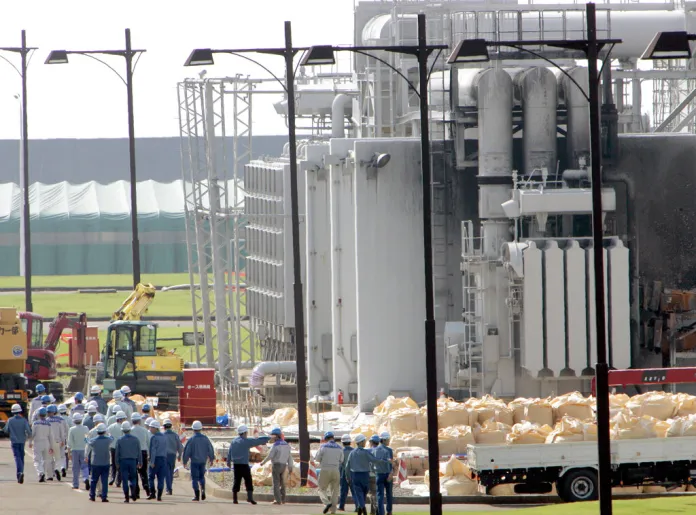
Japan‘s largest nuclear power plant is planning to partially reopen, sparking anxiety in a nation repeatedly traumatized by the technology.
The Niigata Prefectural Assembly voted on Monday to resume operations of the Kashiwazaki-Kariwa power plant, which was closed alongside over 50 other reactors after the Fukushima nuclear meltdown in 2011.
Tokyo Electric Power Company Holdings, the utility company that was in charge of the Fukushima plant, will be reactivating one of the seven reactors at Kashiwazaki-Kariwa on Jan. 20, 2026.
“We remain firmly committed to never repeating such an accident and ensuring Niigata residents never experience anything similar,” TEPCO spokesperson Masakatsu Takata said.
Japan, the only nation in the world that has suffered a nuclear weapon strike first-hand, has long been among the most skittish when it comes to nuclear energy for civic or military purposes.
Those fears were exacerbated by the Fukushima disaster, when a major earthquake and subsequent tsunami took power and cooling systems offline, resulting in a multicore meltdown that forced tens of thousands of residents to evacuate.
It was the largest nuclear incident since Chernobyl.
Over 2,000 “disaster-related deaths” have been recorded, but very few residents died as a direct result of radioactive exposure. Most of the turmoil experienced was due to the sudden evacuations, disrupting healthcare and putting physical strain on the elderly and sick.
The reopening of Kashiwazaki-Kariwa signals that the Japanese public, or at least provincial governments, are ready to move on from Fukushima for the sake of efficient energy.
Nuclear weapons floated
At the highest levels of federal government, Japanese officials are reportedly going a step further and discussing what was once deemed nonnegotiable — the potential for the island to develop a nuclear arsenal for defensive purposes.
State-sponsored news outlet NHK reported last week that an unnamed official in Prime Minister Sanae Takaichi’s office floated the idea of Japan acquiring nuclear weapons for the purpose of national security.

“I think we should possess nuclear weapons,” the Japanese official reportedly said, according to Kyodo News on Thursday.
The alleged comment comes after weeks of diplomatic turmoil with the People’s Republic of China caused by the prime minister’s acknowledgement that a hypothetical invasion of Taiwan by Beijing could demand Japanese intervention.
The Chinese Communist Party has responded with fierce rebuke — with one Japan-based diplomat threatening to cut off Takaichi’s head.
“In the end, we can only rely on ourselves,” the unnamed official reportedly said, according to Kyodo.
The U.S. Department of State stopped short of explicitly condemning the alleged comments, but made its stance clear by heaping praise on Japan’s history of combating nuclear proliferation.
“Japan is a global leader and a valuable partner to the United States on nuclear nonproliferation and advancing nuclear arms control,” a spokesperson told the Japan Times in an email last week. “As the National Security Strategy makes clear, the United States will maintain the world’s most robust, credible, and modern nuclear deterrent to protect America and our allies, including Japan.”
Less diplomatic was the chastisement from the Democratic People’s Republic of Korea, which quoted the director of the government’s Institute for the Studies of Japan as saying the “war criminal state Japan’s attempt to go nuclear must be prevented at any cost as it will bring mankind a great disaster.”
“This statement was not made by mistake or out of reckless motive, but clearly reflects Japan’s long-cherished ambition for nuclear armament,” the North Korean official stated.
TAIWAN ANNOUNCES $40 BILLION DEFENSIVE MISSILE SYSTEM MODELED AFTER ISRAELI ‘IRON DOME’
He added: “The progressive mankind loving justice and peace should resolutely check the dangerous military acts of Japan which is rushing towards nuclear armament with the backing of the US, denying its crime-woven history.”
It is a somewhat farcical analysis from North Korea, given supreme leader Kim Jong Un‘s previous pledge that his government will “never give up our nuclear weapons.”