
A second federal grand jury declined to bring mortgage fraud charges against New York Attorney General Letitia James, according to a statement from her attorney, marking another setback for the Justice Department‘s effort to revive a collapsed prosecution against one of President Donald Trump’s most prominent political adversaries.
James’s lawyer, Abbe Lowell, said Thursday that prosecutors again failed to secure an indictment just one week after a different grand jury declined to bring charges, calling the outcome an unprecedented rejection of what he described as a politically motivated case.
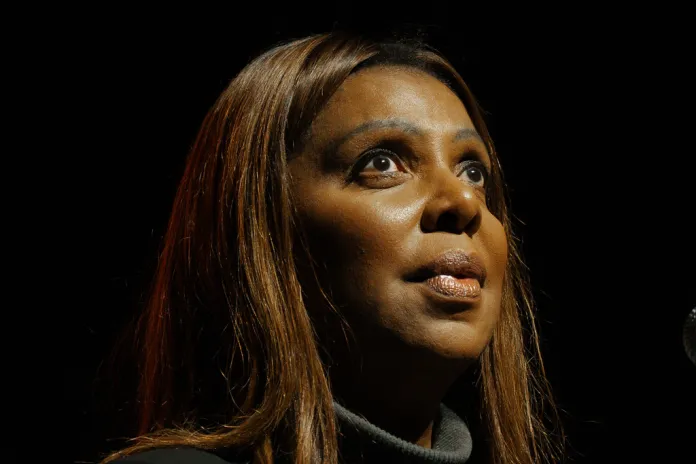
“For the second time in seven days, the Department of Justice has failed in its clear attempt to fulfill Trump’s political vendetta against Attorney General James,” Lowell said in a statement to the Washington Examiner after CNN first reported the failure to obtain an indictment. He added that “two different grand juries in two different cities have refused to allow these baseless charges to be brought.”
The DOJ previously sought to reindict James after the original criminal case was dismissed late last month by a federal judge, who ruled that the prosecutor who brought the charges was unlawfully appointed. James was charged with one count of making false statements to a financial institution and one count of bank fraud, allegations she has denied.
On Nov. 24, U.S. District Judge Cameron McGowan Currie tossed out the indictments against James and former FBI Director James Comey after concluding that Lindsey Halligan, Trump’s handpicked interim U.S. attorney in the Eastern District of Virginia, lacked legal authority to bring the cases. Halligan, a former White House adviser, was installed after the DOJ pushed out the district’s prior interim U.S. attorney amid growing pressure to prosecute Comey and James.
“All actions flowing from Ms. Halligan’s defective appointment,” including the indictments, “were unlawful exercises of executive power and are hereby set aside,” Currie ruled.
The judge dismissed the cases without prejudice, leaving open the possibility that prosecutors could seek new indictments. The DOJ moved quickly to do so, presenting the case to two separate grand juries in Virginia over the past week. Both declined to indict.
Lowell said the repeated failures underscored the weakness of the government’s case and compounded concerns about political interference.
“Career prosecutors who knew better refused to bring it, and now two different grand juries in two different cities have refused to allow these baseless charges to be brought,” he said. Lowell also pointed to Currie’s ruling invalidating Halligan’s appointment, calling the prosecution “a stain on this Department’s reputation” that “raises troubling questions about its integrity.”
Defense attorneys in both the James and Comey cases argued that the prosecutions were selectively and vindictively pursued, citing Trump’s repeated public calls for them to be charged. Trump has frequently accused James, who won a major civil fraud judgment against him and his company, of abusing her office and has publicly urged federal authorities to prosecute her.
The DOJ has maintained that charging decisions were made independently and based on evidence, not presidential pressure. It has not publicly commented on the latest grand jury action.
GRAND JURY DECLINES TO INDICT LETITIA JAMES AFTER EARLIER CASE COLLAPSED
“The unprecedented rejection makes even clearer that this case should never have seen the light of day,” Lowell said, warning that “any further attempt to revive these discredited charges would be a mockery of our system of justice.”
The Washington Examiner contacted the DOJ for comment.