
A consumer watchdog group said leadership at the American Society for the Prevention of Cruelty to Animals is living lavishly off millions of dollars raised in donations while spending relatively little to support local animal shelters.
The ASPCA, a national nonprofit organization known for its commercials featuring abused and malnourished dogs, allocates just a small fraction of its budget annually toward neighborhood pet rescues, according to a report from the Center for the Environment and Welfare.
Despite the more than $446 million that the ASPCA took in last year, the organization only gave $23.3 million, or 5% of its total revenue, in grants to community animal care centers, the charity’s 2024 tax filings show.
Meanwhile, the ASPCA paid its president and CEO, Matt Bershadker, about $1.2 million, and 383 employees on ASPCA’s payroll earned at least six-figure salaries. Altogether, the $152.9 million spent on staff compensation constituted approximately 40% of the ASPCA’s expenses.
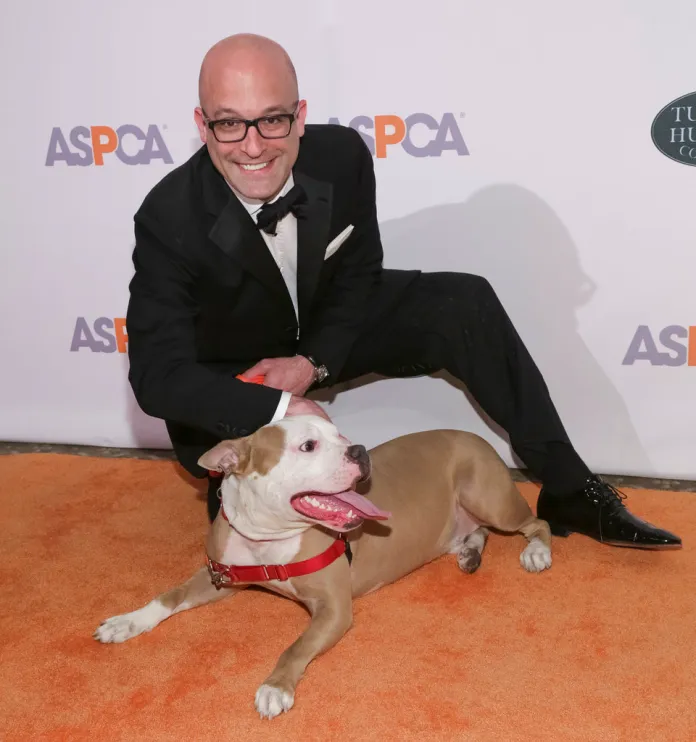
According to the ASPCA’s frequently-asked-questions page addressing why its executives are paid so well, the organization says, “Our compensation practices are designed to attract and retain the talent required to support our mission-based programs effectively.”
The ASPCA said its staff salaries are consistent with those at comparable organizations and abide by Internal Revenue Service guidelines regarding “reasonable compensation” for nonprofit organizations.
The ASPCA also had over $169,000 stashed away in foreign accounts between the Caribbean and Central America, down from $415,000 in offshore holdings in 2023, $10.9 million in 2022, and almost $10 million in 2021.
CEW has been raising awareness around the holidays about the ASPCA’s alleged spending habits ahead of “Giving Tuesday,” a global day of generosity that follows Thanksgiving.
The season of giving is a critical fundraising time for charities soliciting year-end donations. About one-third of all annual charitable contributions are collected during December.
“It’s disappointing to see groups like the ASPCA turn ‘Giving Tuesday’ into ‘Taking Tuesday,’” CEW Executive Director Jack Hubbard told the Washington Examiner.
CEW’s analysis suggests that the ASPCA has been building its financial reserves to scale up its fundraising strategies, national brand, and internal operations.
“The saddest part is that last year, 600,000 cats and dogs were euthanized in shelters across the U.S. Those hundreds of millions of dollars could have been used to save them,” Hubbard said. “The end result: the ASPCA grows wealthier while local shelters remain overcrowded, underfunded, and forced to euthanize healthy pets because resources never reach them.”
The ASPCA’s financial data show 75 cents of every dollar spent by the organization is earmarked for programmatic services that advance its mission, with the majority of that funding purportedly supporting shelters nationwide.
Hubbard, however, said a significant portion of donations to the ASPCA go to supporting the organization’s “factory fundraising” operation, administrative overhead, and lobbying activities, as opposed to on-the-ground animal welfare work.
“Unfortunately, the ASPCA has perfected the art of emotional fundraising while hoarding millions of dollars that sit in investments and failing the 600,000 shelter pets euthanized each year,” Hubbard added. “If donors truly want to help homeless pets, they should give directly to their local shelters.”
The ASPCA disputed the accusations, pointing the Washington Examiner to its website, which says CEW is “the latest front group created by Berman and Company public relations agency with the express purpose of discrediting the ASPCA … because of our effectiveness.”
The ASPCA says Berman and Company, an issue advocacy firm co-owned by Hubbard, is one of the special interest groups “invested in perpetuating industries rooted in systemic animal cruelty” and seeking to “impede the progress we’ve achieved in reforming the American food system.” Hubbard is a leader in the agricultural sector, fighting against alternatives to animal products, such as lab-grown meat, which have harmed the farming industry. In contrast, the ASPCA has long been pushing for consumers to eat plant-based food, which it calls the “humane choice.”
“This is a false and misleading narrative, peddled by a PR firm paid to discredit the ASPCA’s work to end animal suffering across the country,” ASPCA spokeswoman Rebecca Goldrick told the Washington Examiner.
Goldrick said the ASPCA is focused on tackling the “root causes” of animal homelessness and suffering.
“Every year, our hands-on work — in addition to our partnerships with hundreds of local shelters and rescues — directly impacts hundreds of thousands of animals, with our lasting solutions benefiting millions more that we cannot serve through local partnerships and grant funding alone,” Goldrick said.
According to the ASPCA, one of the most common attacks against it is the claim that it does not operate local organizations or provide significant grant funding to shelters.
“We are not a grantmaking foundation or an umbrella organization,” it notes.
Indeed, contrary to public misconception, the ASPCA is not affiliated with any local SPCA. Because it is not an umbrella organization, the ASPCA does not directly oversee or operate local shelters, except for a single adoption center in New York City. Instead, local SPCAs are independently run and rely heavily on direct donations.

The ASPCA has faced criticism in the past from local SPCAs over its lack of funding from the national organization. According to a 2021 CBS News investigation into the ASPCA’s fundraising practices, some SPCAs said the public is led to believe donor dollars will trickle down to front-line rescue workers.
“The major problems that most SPCAs have is that the ASPCA does not fund these agencies,” Nassau County SPCA President Gary Rogers told CBS News. “We receive no money from them at all.”
Jo Sullivan, Houston SPCA’s chief community and development officer, said, “It is frustrating on this side of the table to realize that a bulk of our time and our staff time is spent trying to explain the difference between national and local,” adding, “We need our donors and the people in our community to know where their money is going.”
In 2011, several SPCAs in California filed a complaint against the ASPCA, alleging that its “unfair and deceptive” fundraising tactics harm local humane societies by profiting off confusion over their similar-sounding names and branding.
ASPCA PUSHES ANTI-MEAT AGENDA WHILE SENDING 2% OF BUDGET TO ANIMAL SHELTERS: WATCHDOG
However, the lawsuit was reportedly dropped after the Better Business Bureau’s national advertising division issued an opinion siding with the ASPCA. However, the bureau recommended that the ASPCA “modify its website to more clearly explain that the organization is not directly affiliated with local SPCAS or local humane associations.”
Many local SPCAs have informational webpages dedicated to differentiating themselves from the ASPCA and urging donors to contribute locally.