
A federal appeals court on Monday ruled that Alina Habba unlawfully served as New Jersey’s top federal prosecutor, adding fresh legal turmoil to President Donald Trump’s efforts to keep loyalists installed in U.S. attorney positions after two high-profile cases fell apart last week over similar appointment problems.
A three-judge panel on the U.S. Court of Appeals for the Third Circuit upheld a lower court’s finding that Habba, a Trump ally and former personal attorney to the president, was never validly in office. The ruling comes days after a judge dismissed the criminal cases in Virginia against former FBI Director James Comey and New York Attorney General Letitia James, citing defects in the appointment of Lindsey Halligan, Trump’s temporary U.S. attorney in the Eastern District of Virginia.
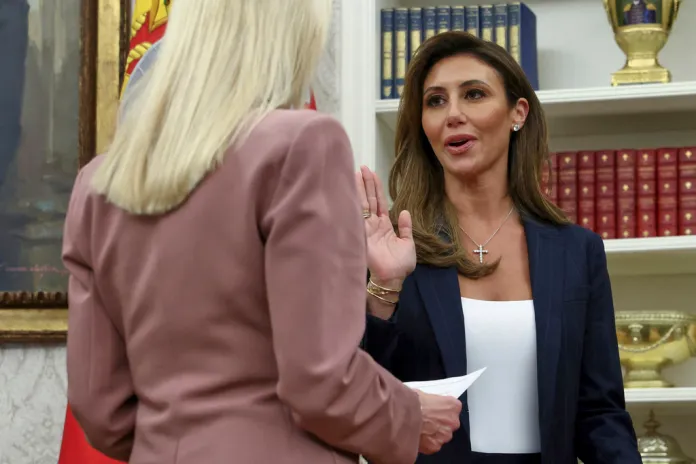
The new setback in New Jersey underscores how Trump’s broader strategy to bypass Senate confirmation in blue states is starting to buckle under judicial scrutiny. The administration can now seek review from the full Third Circuit or elevate the case directly to the Supreme Court.
The Third Circuit panel heard arguments on Habba’s appointment in October and questioned the legality of the steps Trump and Attorney General Pam Bondi took to reinstall her after her initial 120-day tenure expired. The panel — comprised of two former President George W. Bush appointees and one former President Barack Obama appointee — appeared skeptical of Justice Department lawyer Henry Whitaker’s claim that Bondi had authority to fill the vacancy after Trump fired the court-appointed successor.
Whitaker insisted the administration was relying on “overlapping mechanisms” provided by Congress and that the DOJ had been “scrupulously careful” to follow them. One judge rejected that narrative, saying the sequence of events that led to Habba’s appointment looked like “a complete circumvention” of the Constitution’s appointments clause.
Washington lawyer Abbe Lowell, who also defended the New York attorney general in her criminal case, represented the two sets of routine defendants who challenged Habba’s authority, arguing she could not prosecute them because she was never lawfully in office.
Habba’s case has been the most advanced test of Trump’s approach to U.S. attorney appointments, but similar challenges are now overtaking other key prosecutions. In addition to Halligan’s collapse in Virginia, Trump-installed U.S. attorney Bill Essayli in California faces his own litigation challenging the validity of his appointment.
Habba had no path to Senate confirmation, as New Jersey’s Democratic senators, Cory Booker and Andy Kim, refused to return blue slips.
HABBA’S US ATTORNEY APPOINTMENT FACES UPHILL BATTLE
The blue slip custom, reaffirmed by Senate Judiciary Committee Chairman Chuck Grassley (R-IA), effectively gives home-state senators veto power over U.S. attorney nominations. Trump has intensified his criticism of the practice, recently firing former U.S. Attorney Erik Siebert after Siebert received Democratic support and amid reporting that he was unwilling to bring criminal cases against Comey and James.
The Washington Examiner reached out to the DOJ for comment.