
Specialist Grundle and the magic rock
Trent Reedy
Late last year I told you about Specialist Grundle, with whom I served in the war in Afghanistan. You probably tried to block out the memory of Grundle, and I don’t blame you. Back in 2004, I was stuck with this guy for a year. His crazy antics wouldn’t stop. His weight alone was grounds for denial of promotion to sergeant, but Grundle was furious at his team leader for “stealing” the position he imagined was his.
Grundle was a specialist. I was a corporal. Both are E-4 ranks, but technically, a corporal is a noncommissioned officer, outranking a specialist. Except nobody in the National Guard treated the corporal rank that way. It didn’t matter. I loved those corporal stripes just for outranking Grundle, driving him crazy as revenge for his nonstop whining and for his boasting about his supposed incredible military knowledge and experience.
“If we just sent one lethal, experienced, highly motivated soldier, such as myself, back into the area, I could infiltrate and unleash an ambush upon the enemy.”
“Specialist Grundle!” I interrupted. We were at Fort Hood, Texas. “It’s after 5. The guys pretending to be the enemy have gone home. Yes, you could infiltrate the area and go all around the dumpsters and maintenance sheds, but there’d be nobody there. It was a training exercise.”
Grundle glared at me. It was hard to believe Grundle was real, yet he was right in front of me.
One great thing about the Army is it’s a model for religious tolerance. In the Army, I have prayed with all types of Christians. I’ve prayed with Muslims. I’ve proudly served alongside Buddhists, Jews, and atheists. We put our mission first and respected different beliefs.
I say this because Specialist Grundle had a thing about rocks. Maybe he believed rocks could summon power. I don’t know. His beliefs were fine. That is, until they interfered with the rest of us and our duties.
Early in our tour, we had three squads, some officers, and some NCOs, crammed into an Afghan residential mudbrick compound. Daily highs were well above 100 degrees, and there was no air conditioning. Our barracks was a converted stable with a concrete floor and domed mudbrick ceiling like certain restaurant pizza ovens.
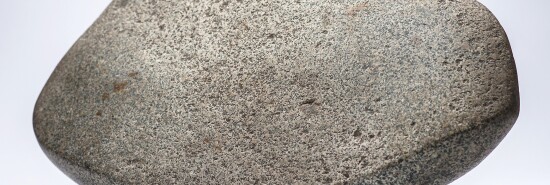
One day, I rolled out of my rack. In an exhausted daze, I slipped on my boots and headed for the door, only to step on a smooth flattish round stone, nearly turning my ankle. I cursed, picked up the stone, and tossed it outside where loose river rock covered the ground.
Later, getting ready for an overnight guard shift in the dark, I stubbed my toe on the same rock. “What the hell?” I tossed the rock back outside.
The next morning, it was back where it had been in the center of the narrow walkway between the bunks.
“Who keeps putting this rock here?”
“Grundle,” Pfc. Carson said. “He thinks it has powers.”
“Yeah, the power to make us trip,” I said, tossing it on Grundle’s rack.
An hour later, when I returned to the barracks, the rock was back on the floor.
“Specialist Grundle!” I shouted, waking him and robbing him of desperately needed sleep. “You always talk about your military expertise and say I’m too casual about the Army. Here’s some tactical information for you. If we’re attacked and have to run out to fight, we must go right through here. Last thing we need is to be tripping over a f***ing rock! Whatever you believe about rocks is fine. Pray to it. Keep it for good luck. Nobody cares. Just keep it in your rack, your pocket, whatever. If I see this rock in the middle of the floor one more time, I’m gonna…” and I made an anatomically colorful suggestion about where the rock might end up. Readers can infer.
I never saw that rock again. But it was only July, the second month in my yearlong deployment. My battle against Specialist Grundle was far from over.
Trent Reedy, author of several books, including Enduring Freedom, served as a combat engineer in the Iowa National Guard from 1999 to 2005, including a tour of duty in Afghanistan.
*Some names and call signs in this story may have been changed due to operational security or privacy concerns.